The Supreme Court Just Rewrote America's Trade Playbook
Trump's new 10% global tariff is just the beginning of a constitutional crisis that will reshape how presidents wield economic power.
The Supreme Court struck down President Trump's signature tariff program on Friday, ruling that presidents cannot invoke emergency economic powers to impose sweeping trade taxes. By Saturday, Trump had announced a new 10% global tariff under different legal authority, then raised it to 15% by Monday. What looks like political theater is actually a constitutional earthquake that will reshape American trade policy for decades.

The Legal Foundation Just Cracked
The Court's decision in Learning Resources Inc. v. Trump eliminates the International Emergency Economic Powers Act (IEEPA) as a tool for imposing tariffs. This matters because IEEPA had been the nuclear option of trade policy, allowing presidents to act unilaterally during declared emergencies.
Trump's response reveals the new reality: he immediately pivoted to Section 122, a 1970s-era provision that allows tariffs to address "serious balance-of-payments deficits." The Tax Foundation estimates these new tariffs will apply to $1.2 trillion worth of imports after accounting for exemptions under USMCA and existing Section 232 steel and aluminum tariffs.
But Section 122 comes with constraints IEEPA didn't have. It requires demonstrable economic justification and faces easier congressional override procedures.
The constitutional implications extend far beyond trade. "It shifts how trade is done with the largest economy in the world, and that has economic consequences," Mike Reid, head of U.S. economics at Royal Bank of Canada, told CNBC. The ruling essentially strips presidents of their most powerful unilateral trade weapon.
Your Wallet Takes the Hit
The Congressional Budget Office projects a 10% universal tariff would decrease federal deficits by $2.2 trillion over the next decade. That sounds positive until you realize who's actually paying: American consumers, not foreign governments.

Coffee prices jumped 9.8% between April and August 2025 after new import tariffs took effect, including a 3.6% spike in August alone. While poor harvests contributed to supply constraints, the acceleration coincided directly with tariff implementation. Coffee isn't unique—the U.S. imports 96% of its coffee, making it especially vulnerable to trade taxes.
Yale Budget Lab research shows a 20% broad tariff would raise consumer prices by 2.1% to 2.6% in the short run, depending on international retaliation. With Trump's current 15% rate, expect proportional impacts across tariff-sensitive categories including electronics, toys, and automobiles.
The overwhelming consensus among economists is that under normal circumstances, tariffs are passed on to consumers in the form of higher prices.
Paul Krugman's analysis of recent consumer price data confirms this pattern. Tariff-heavy categories like electronics and appliances have seen the steepest price increases since implementation began.
The Politics of Emergency Economics
Trump's quick pivot from IEEPA to Section 122 exposes how presidents have stretched emergency powers beyond recognition. IEEPA was designed for genuine national security crises, not routine trade disputes. The Supreme Court essentially said presidents cannot manufacture economic emergencies to justify unilateral tariffs.
This creates a fascinating political dynamic. Section 122 requires presidents to demonstrate actual balance-of-payments problems and allows Congress to override tariffs with simple majority votes. Unlike IEEPA's broad emergency language, Section 122 demands specific economic justification.

The ruling also affects Trump's threatened tariffs on eight European countries over Greenland disputes. Without IEEPA's emergency framework, such geopolitically motivated trade measures become much harder to justify legally.
Congressional Democrats now have clearer paths to challenge tariffs through both courts and legislative override procedures. This shifts trade policy back toward the collaborative approach the Constitution originally envisioned.
The Global Trade Realignment
International markets are recalibrating around America's new legal constraints on presidential trade power. The Peterson Institute for International Economics notes that while the Supreme Court ruling changes presidential authorities, it doesn't eliminate America's ability to impose tariffs through proper legislative channels.
China announced record trade surplus numbers last week, partly reflecting accelerated exports ahead of potential new U.S. restrictions. European allies are reassessing trade relationships now that American presidents cannot unilaterally impose emergency tariffs over political disputes.
The ruling forces more predictable, legally grounded trade policy. International businesses can no longer face sudden tariff announcements justified by manufactured emergencies. Trade agreements become more valuable because they provide clearer legal protection.
Royal Bank of Canada's analysis suggests this legal clarity, despite short-term disruptions, could stabilize international trade relationships by removing the threat of arbitrary presidential trade actions.
What Happens Next
Trump's 15% global tariff under Section 122 will face immediate legal challenges on grounds that current U.S. balance-of-payments data doesn't support emergency action. Unlike IEEPA's broad language, Section 122 requires demonstrable economic justification that courts can review.
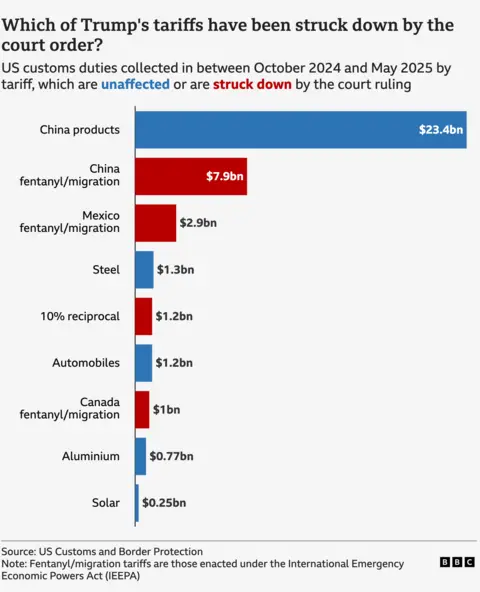
Consumer prices will continue rising in tariff-sensitive categories through 2026. The Congressional Budget Office's $2.2 trillion revenue projection assumes sustained implementation, but legal challenges make this uncertain.
Congress gains unprecedented leverage over trade policy. Simple majorities can now override presidential tariffs more easily than during the IEEPA era. This returns trade authority closer to its constitutional home in the legislative branch.
The Supreme Court ruling fundamentally alters presidential power over economic policy. Future presidents cannot simply declare trade emergencies to bypass Congress. This constitutional reset forces more collaborative, transparent trade policymaking.
The era of presidential trade by emergency declaration is over. What comes next will require actual justification, not just executive will.
For consumers, the immediate impact means higher prices on imported goods through 2026, with coffee, electronics, and automobiles leading increases. For democracy, it means presidents must work within constitutional constraints when reshaping America's economic relationships with the world.