The Supreme Court Just Handed Trump His First Real Loss—And He's Not Taking It Well
The tariff ruling exposes a fundamental shift in presidential power that could define the rest of Trump's term.
On February 20, 2026, Donald Trump called the Supreme Court justices "fools" and their ruling "terrible." Within hours, he announced new 10% global tariffs to replace the ones they had just struck down. The whiplash wasn't about trade policy—it was about a president discovering that even a conservative Supreme Court has limits.
:max_bytes(150000):strip_icc()/GettyImages-2207587804-8427404b130c43cdbf76608c381b17e6.jpg)
The Court's 6-3 decision in V.O.S. Selections, Inc. v. Trump invalidated the president's sweeping "Liberation Day" tariffs imposed in April 2025. These weren't modest trade adjustments—they were comprehensive import duties on virtually every U.S. trading partner, friend and foe alike. Trump had justified them under the International Emergency Economic Powers Act (IEEPA), a 1970s statute designed for genuine national emergencies.
Chief Justice John Roberts, writing for the majority, delivered a constitutional history lesson that stung. The tariff authority belongs to Congress, he noted, because the Framers "had just fought a revolution motivated in large part by 'taxation without representation.'" In the nearly 50-year history of IEEPA, Roberts continued, "no President has invoked the statute to impose any tariffs—let alone tariffs of this magnitude and scope."
The Court That Trump Built Turns Against Him
The composition of the majority tells the real story. This wasn't liberal justices blocking a conservative president. Three Trump appointees—Neil Gorsuch, Brett Kavanaugh, and Amy Coney Barrett—joined Roberts, along with Justices Elena Kagan and Ketanji Brown Jackson. Only Clarence Thomas, Samuel Alito, and surprisingly, Sonia Sotomayor dissented.
The alignment reveals something crucial about how the Roberts Court views presidential power. As legal scholars have noted, this Court consistently supports presidential authority over personnel decisions—the "who" of government. Trump has successfully fired heads of independent agencies with the Court's blessing. But when it comes to substantive policy decisions—the "what" of government—the justices draw sharp lines.
"This judicial sense of broad presidential power in the 'who' cases differs completely from the court's sense of presidential power in the 'what' cases," notes constitutional law expert Adam White.
The tariff ruling fits this pattern perfectly. Trump can fire agency heads at will, but he cannot unilaterally reshape America's entire trade relationship with the world. The Court sees personnel control as inherently executive, but views sweeping economic policy as requiring congressional authorization.
The Economic Gamble That Backfired
Trump's original tariff strategy was economically audacious and legally risky. The Liberation Day tariffs, announced with great fanfare on April 2, 2025, targeted imports from nearly every country. Unlike his first-term tariffs that focused on China, these levies cast the widest possible net.
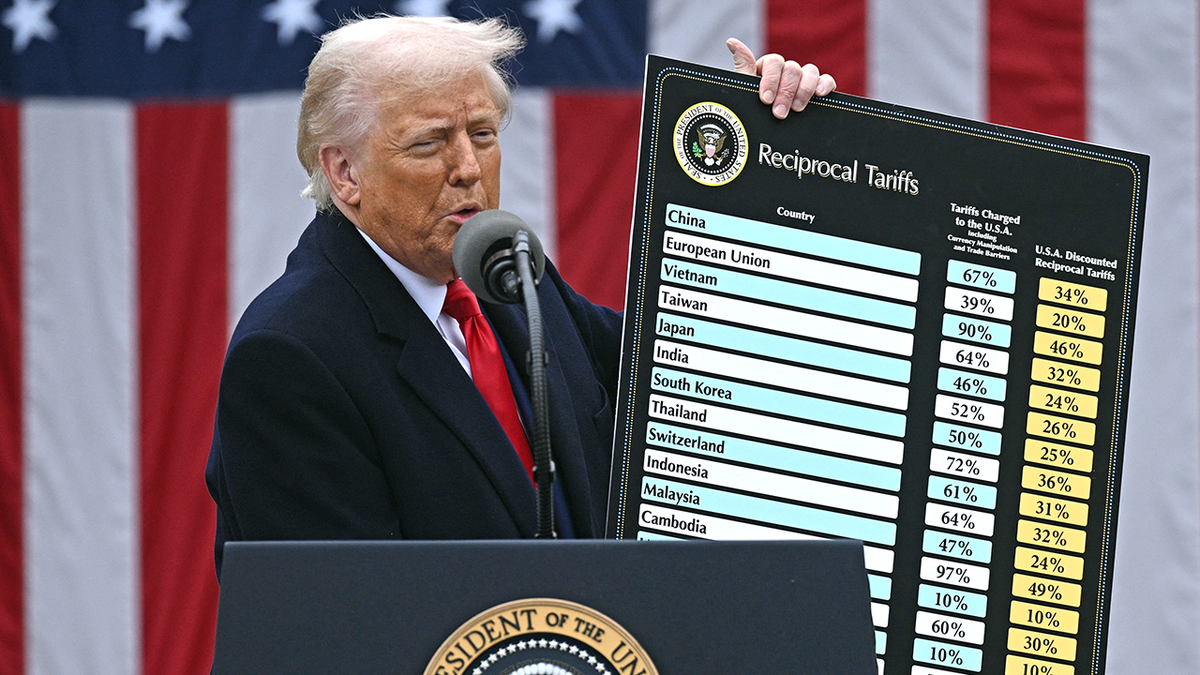
The economic impact was immediate. Import volumes from China dropped significantly in response to the tariffs, but global markets struggled to adapt to what one analyst called "whipsawing trade policies." Small businesses and states quickly challenged the tariffs in court, arguing that IEEPA contained no mention of tariff authority.
They were right. The statute grants presidents power to "regulate" imports during emergencies, but as the Court majority found, regulation doesn't mean taxation. The distinction matters because taxation—including tariffs—represents one of Congress's most jealously guarded constitutional powers.
Trump's Immediate Counter-Strike
Trump's response revealed both his frustration and his remaining options. Hours after the Court ruling, he announced the 10% global tariff using different legal authority. The move was classic Trump—defiant, immediate, and designed to show that Supreme Court or not, he remains in charge of trade policy.
But the new tariffs operate under more constrained legal frameworks. Unlike the sweeping IEEPA powers he claimed before, Trump now relies on narrower statutory authorities that Congress has explicitly granted for trade purposes. The 10% rate suggests he's playing within more limited bounds.
The shift from broad emergency powers to specific trade statutes represents a significant constraint on presidential authority—one that will likely define economic policy for the remainder of Trump's term.
The immediate market reaction was telling. While traders had grown accustomed to Trump's tariff announcements, the Supreme Court ruling introduced new uncertainty. If the Court was willing to strike down sweeping trade measures once, it might do so again.
What This Means for Presidential Power
The tariff decision sits within a broader constitutional moment. The Supreme Court is simultaneously deciding four major cases involving Trump administration actions that could have "generational consequences" for presidential power. The tariff ruling provides early insight into how the Court will balance executive authority against constitutional limits.

The pattern emerging suggests a Court willing to grant presidents broad authority over the executive branch itself—hiring, firing, and directing federal agencies. But when presidents claim power to make sweeping policy changes that traditionally require congressional approval, the justices apply stricter scrutiny.
This distinction has profound implications for the remainder of Trump's presidency. His ability to reshape federal agencies through personnel decisions remains largely intact. But ambitious policy initiatives that stretch executive authority may face skeptical judicial review, even from conservative justices.
The Limits of Executive Defiance
Trump's angry response to the Supreme Court ruling—calling the justices "fools"—reflects a president discovering the boundaries of his authority. Unlike legislative defeats, which can be blamed on political opponents, Supreme Court losses carry constitutional weight that's harder to dismiss.
The immediate imposition of new 10% tariffs shows Trump isn't backing down from his trade agenda. But the shift to narrower legal authorities suggests he's adapting to judicial constraints. The question becomes whether this pattern—aggressive initial actions followed by judicial correction and presidential adjustment—will define his remaining term.
For American businesses and trading partners, the lesson is clear: Trump's trade policy remains aggressive, but it now operates within more defined legal boundaries. The Supreme Court has established that even in an era of expanded executive power, some constitutional lines remain firm.
The tariff battle isn't really about trade percentages or import duties. It's about whether a president can unilaterally reshape fundamental aspects of American economic policy. The Supreme Court's answer, delivered by a conservative majority to a Republican president, was unambiguous: No, he cannot.