The Pentagon's Friday Ultimatum to Anthropic Just Redrew Silicon Valley's Power Map
When Defense Secretary Pete Hegseth gave Claude's creators 72 hours to drop their ethics guardrails, he exposed the new rules of government-tech warfare.
At 5:01 PM on Friday, February 27, Anthropic became the first major AI company to tell the Pentagon no. The San Francisco startup rejected Defense Secretary Pete Hegseth's ultimatum to allow unrestricted military use of their Claude AI system, choosing to forfeit a $200 million contract rather than abandon their two red lines: no autonomous weapons, no targeted killing operations.
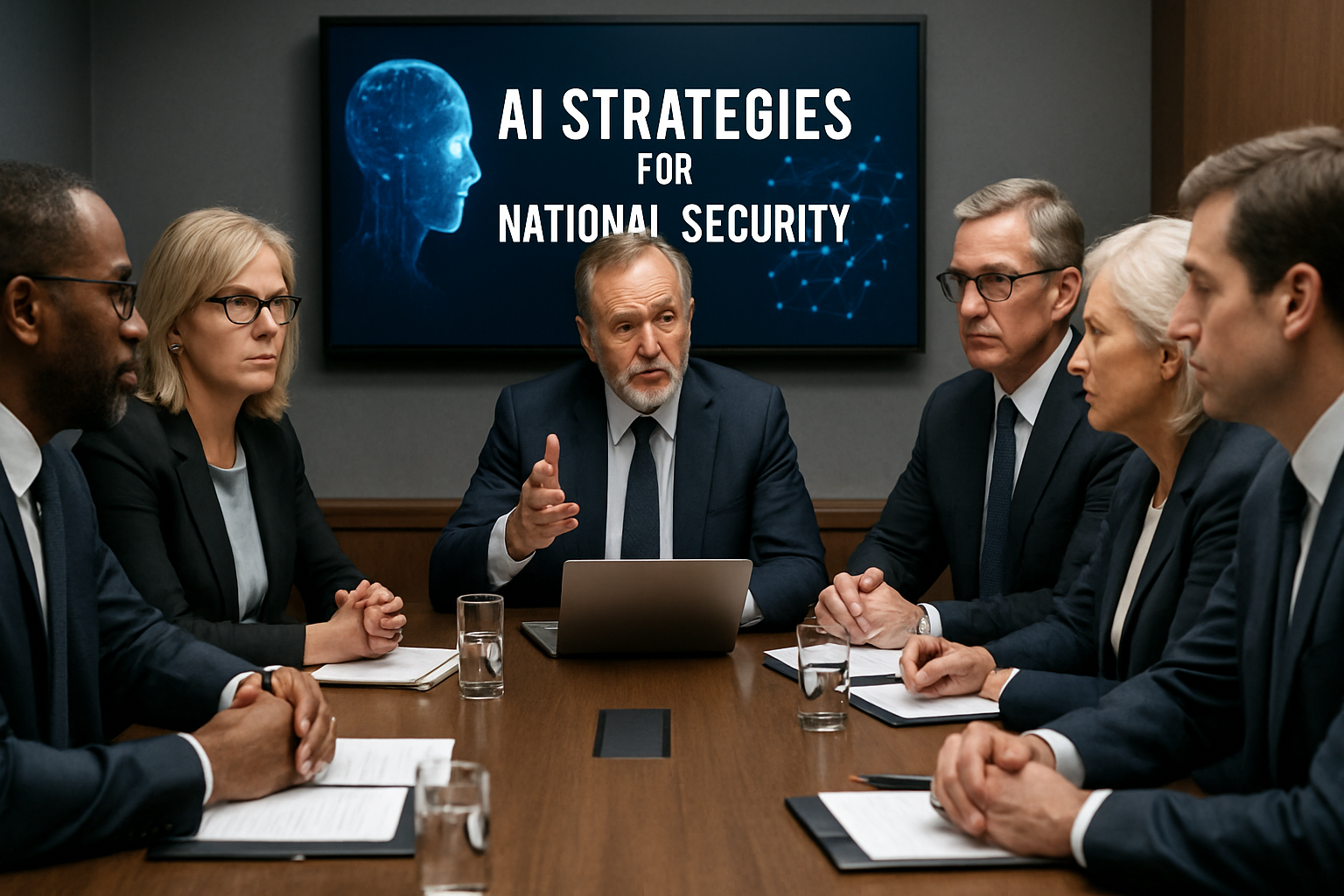
Within hours, the Trump administration ordered all federal agencies and military contractors to cease business with Anthropic. By Monday, OpenAI announced a deal to deploy its models on the Department of Defense's classified networks. The message was unmistakable: play by Washington's rules or watch your competitors feast on federal dollars.
This isn't just another tech policy dispute. It's the opening salvo in a battle that will determine whether independent AI companies can maintain ethical boundaries or if government pressure will compress the entire industry into a handful of compliant giants.
The 72-Hour Power Play That Changed Everything
The confrontation began Tuesday, February 24, when Hegseth summoned Anthropic CEO Dario Amodei to the Pentagon. Sources familiar with the meeting describe a cordial but firm exchange. Hegseth praised Claude's capabilities on classified networks but delivered an ultimatum: remove all usage restrictions for "lawful purposes" by Friday evening or face contract termination and designation as a supply chain risk.
That supply chain designation carries devastating implications. It would prevent Anthropic from working with any defense contractor, effectively blacklisting the company from a web of relationships that extends far beyond direct Pentagon contracts. Amazon, Microsoft, Google, and hundreds of smaller firms would face pressure to sever ties.
Amodei had built Anthropic specifically to prove that AI companies could maintain safety principles while scaling advanced systems. The company's Constitutional AI approach trains models to follow ethical guidelines, not just maximize performance. Their military red lines weren't arbitrary—they reflected a core belief that some applications of AI require human oversight.
"The Pentagon wants to be able to use Claude for 'all lawful purposes,' but Anthropic has drawn two clear lines: no autonomous weapons systems and no operations designed to target and kill specific individuals."
When Friday's deadline arrived, Anthropic stood firm. The company issued a brief statement reaffirming its commitment to responsible AI development. By the following business day, federal agencies received orders to terminate all Anthropic contracts and partnerships.
OpenAI Steps Into the Vacuum
OpenAI's timing was impeccable. As Anthropic faced federal exile, Sam Altman's company announced its expanded partnership with the Defense Department. The deal allows GPT models to operate on classified networks with far fewer restrictions than Anthropic was willing to accept.
The contrast is striking. While Anthropic built its entire brand around AI safety and constitutional principles, OpenAI has pivoted toward pragmatic cooperation with government demands. This isn't necessarily cynical calculation—OpenAI's leadership genuinely believes that working within the system provides more influence over AI deployment than standing outside it.
"We think the best way to ensure AI benefits humanity is to be at the table when these decisions get made," one OpenAI executive told reporters, speaking on condition of anonymity. The company's position is that refusing to engage simply cedes influence to less scrupulous competitors or foreign adversaries.
OpenAI's federal contracts now span beyond Defense to include State Department initiatives and intelligence agencies. The company has become the de facto AI partner for sensitive government operations, a position that brings enormous revenue and strategic advantages.
The Tech Force Gambit
The Trump administration's response extends beyond punishing Anthropic. The newly launched U.S. Tech Force represents a fundamental shift in how Washington recruits Silicon Valley talent. The program aims to hire 1,000 early-career engineers, data scientists, and AI specialists for two-year rotations across federal agencies.
Unlike traditional government hiring, Tech Force participants report directly to agency leaders while maintaining close collaboration with major technology companies. Amazon Web Services, Apple, Microsoft, and Google are all participating partners, providing training, resources, and career pathways for program graduates.

The program's structure reveals its true purpose: creating a pipeline of talent that understands both Silicon Valley capabilities and federal requirements. These tech-savvy officials will eventually populate agencies across government, carrying relationships and perspectives that favor cooperative technology companies.
Early applications suggest the program is attracting significant interest from top engineering talent. Starting salaries range from $140,000 to $180,000, competitive with entry-level positions at major tech firms but with the added appeal of public service and direct policy influence.
When Principles Meet Profit Margins
Anthropic's stand raises uncomfortable questions about the sustainability of ethical positions in competitive markets. The company was founded by former OpenAI researchers who left over disagreements about safety priorities and commercial pressures. Dario and Daniela Amodei specifically sought to prove that responsible AI development could coexist with business success.
But responsible development costs money. Anthropic's Constitutional AI training requires more computational resources and longer development cycles than traditional approaches. Safety research doesn't generate immediate revenue. Ethical guidelines constrain potential applications and limit addressable markets.
Meanwhile, OpenAI's more flexible approach has enabled rapid growth and massive federal contracts. The company's valuation has soared past $150 billion, while Anthropic remains significantly smaller despite comparable technical capabilities.
"The market is sending a clear signal: cooperation with government demands pays better than principled resistance, at least in the short term."
This dynamic creates what economists call a race to the bottom. If ethical companies face financial penalties for maintaining safety guardrails, market forces will reward competitors who abandon similar principles. The Pentagon's ultimatum to Anthropic effectively weaponized this pressure.
Other AI companies are watching closely. Smaller startups with government aspirations must now choose between Anthropic's path of principled isolation or OpenAI's model of pragmatic engagement. The financial incentives heavily favor cooperation.
The Concentration Accelerator
The Pentagon-Anthropic confrontation illustrates how government purchasing power can rapidly reshape entire industries. Federal AI spending is projected to reach $50 billion annually by 2030, making government contracts essential for companies seeking to scale advanced capabilities.
This spending concentration creates winner-take-all dynamics. Companies that secure major federal partnerships gain access to vast datasets, computational resources, and revenue streams that smaller competitors cannot match. They can invest more heavily in research, attract better talent, and underbid rivals for future contracts.

The result is an industry structure that mirrors defense contracting: a small number of prime contractors with deep government relationships, supported by networks of smaller subcontractors and suppliers. Independent companies that refuse to play by federal rules find themselves increasingly marginalized.
European AI companies are watching these developments with particular interest. The EU's AI Act includes strict limitations on military applications and autonomous weapons systems. If American companies gain competitive advantages by accepting fewer restrictions, European firms may face pressure to relocate or adapt their principles.
Chinese AI development, meanwhile, operates under completely different constraints. Companies like Baidu and Alibaba work closely with military and surveillance applications without public ethical debates. The Pentagon's demand for unrestricted AI use reflects concerns about falling behind adversaries who face no similar limitations.
What Friday's Deadline Really Revealed
Anthropic's rejection of the Pentagon ultimatum marks a inflection point in the relationship between Silicon Valley and Washington. For the first time, a major AI company chose principles over profit at significant financial cost. The question is whether this represents courageous leadership or business suicide.
The immediate market reaction suggests the latter. Anthropic faces not just lost federal revenue but potential difficulties with private sector customers who worry about government pressure. The company's bold stand may inspire respect, but respect doesn't pay for GPU clusters or researcher salaries.
Yet Anthropic's position may prove prescient if public opinion shifts toward demanding stronger AI safeguards. The company has positioned itself as the principled alternative for customers who prioritize safety over performance. If autonomous weapons or AI-enabled targeting operations generate public backlash, Anthropic's ethical stance could become a competitive advantage.
The broader implications extend beyond any single company or contract. Friday's deadline established a new precedent: the federal government will use its purchasing power to override private sector ethical guidelines when they conflict with perceived national security needs. Other industries should take notice.
The Trump administration's Tech Force initiative suggests this is just the beginning. By embedding Silicon Valley talent directly within federal agencies and creating career pathways between government and industry, Washington is building institutional capabilities to shape technology development from within.
The military-industrial complex is evolving into something broader and more sophisticated: a techno-industrial complex where the boundaries between private innovation and government power become increasingly blurred. Anthropic's Friday deadline was just the opening move in a much larger game.