NASA Finally Admits What Everyone Knew: The Moon Landing Timeline Was Fantasy
After years of broken promises and $2 billion in overruns, the space agency rewrites its Artemis roadmap from scratch.
In February 2026, NASA Administrator Jared Isaacman stood before cameras and did something remarkable for a federal agency: he admitted the plan was broken. The Artemis III mission, which for years had been sold as America's triumphant return to the lunar surface, would no longer attempt to land on the moon at all. Instead, it would become a practice run in Earth orbit, docking with prototype lunar landers like a cosmic dress rehearsal.

This wasn't just another delay announcement. This was NASA essentially tearing up its homework and starting over, acknowledging that the original Artemis timeline was built on wishful thinking rather than engineering reality.
The $2 Billion Reality Check
The numbers tell the story NASA's press releases wouldn't. A 2024 Government Accountability Office audit found that Artemis programs accounted for most of NASA's $500 million in cost overruns that year alone. The Space Launch System and Orion capsule, the program's flagship components, have burned through $2 billion more than budgeted while running at least two years behind schedule.
NASA requested $11.2 billion in fiscal year 2024 just to fund the project through 2028. The agency's own inspector general estimates the program will consume more than $80 billion over its complete lifecycle. That's roughly $4 billion per astronaut if the program achieves its goal of landing 20 people on the moon over the next decade.
The Orion crew module alone has become a case study in how not to manage a space program. Technical and development challenges have plagued the capsule from the beginning, with requirement changes cascading through the entire system like falling dominoes.
Every main component of the rocket designed for the first Artemis test experienced technical challenges, performance issues, and requirement changes that collectively resulted in $2 billion of cost overruns and at least 2 years of schedule delays.
When Politics Meets Physics
The original Artemis timeline wasn't created by engineers. It was created by politicians who wanted to make history before leaving office. In 2019, Vice President Mike Pence announced that NASA would land astronauts on the moon by 2024, cutting the agency's previous timeline in half with a single speech.

NASA dutifully adjusted its presentations and budgets to match the political directive, but physics doesn't negotiate with campaign schedules. The agency was essentially asked to compress a decade of development work into five years while using legacy components that were already behind schedule.
The Space Launch System, inherited from the cancelled Constellation program, carried forward design decisions made in 2005. The Orion capsule had been in development since 2006. By the time Artemis launched in 2019, NASA was trying to build a 2020s moon program with 2000s hardware and a 2024 deadline.
The Great Reshuffling
Isaacman's February 2026 announcement wasn't just about admitting failure. It was about fundamentally redesigning the program around what's actually possible rather than what sounds good in congressional hearings.
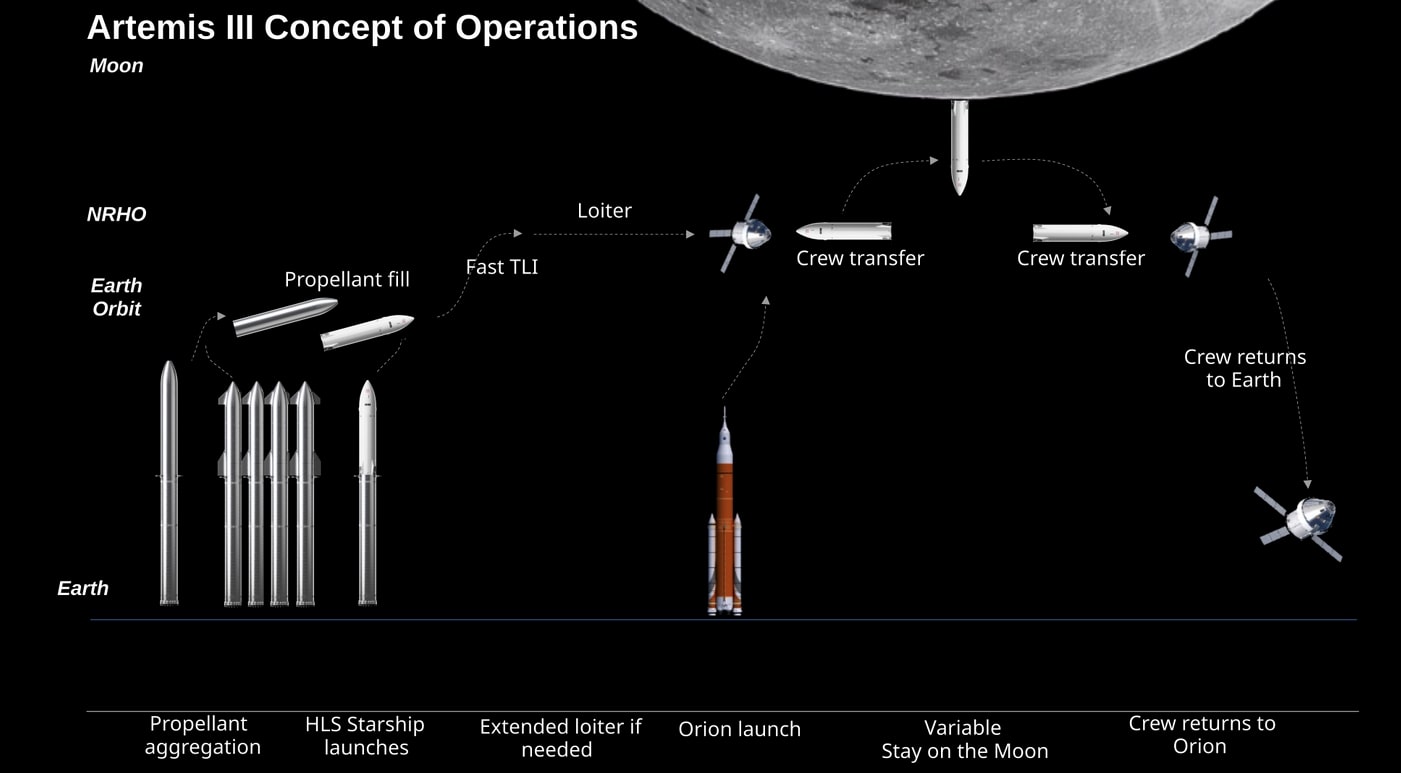
The new plan splits the difference between ambition and reality. Artemis II, the crewed mission around the moon, gets pushed to April 2026. The redesigned Artemis III becomes an Earth orbit shakedown cruise in 2027, where astronauts will dock with SpaceX's Starship or Blue Origin's lunar lander prototypes to test procedures and equipment.
The actual moon landing gets pushed to 2028, but here's the twist: NASA now plans two lunar missions that year. It's a classic project management move, building buffer time by spreading risk across multiple attempts rather than betting everything on a single launch window.
The Technical Debt Problem
What killed the original timeline wasn't any single catastrophic failure. It was the accumulation of small compromises and inherited problems that finally reached critical mass. NASA's inspector general identified this as one of the agency's top management challenges, noting that technical debt from legacy programs was compounding faster than new development could resolve it.
The Artemis I test flight in December 2022 revealed dozens of issues that needed fixes before the next mission. The heat shield experienced unexpected erosion. Electrical systems behaved differently than ground tests predicted. Each discovery triggered months of analysis and redesign work.
Meanwhile, the program's complexity kept growing. Artemis depends on coordination between NASA's SLS rocket, the Orion capsule, SpaceX's Starship lunar lander, new spacesuits, and a lunar Gateway station that doesn't exist yet. Each component has its own development timeline, and delays in any one piece ripple through the entire program.
NASA must identify and implement effective management strategies to control costs, manage technical risks, and ensure the Artemis campaign achieves its ambitious goals within reasonable time and cost parameters.
What This Really Means
The Artemis overhaul represents something bigger than a schedule adjustment. It's NASA's admission that the agency forgot how to build ambitious space programs after decades of focusing on incremental improvements to existing capabilities.
The Apollo program succeeded because it was designed from scratch with a clear goal and unlimited budget. Artemis tried to succeed by stitching together existing programs with a political deadline and constrained funding. The result was predictable: a program that couldn't deliver on its promises because those promises were never realistic in the first place.
The new approach acknowledges this reality. By adding the orbital test mission and spreading lunar landings across multiple attempts, NASA is finally building margin for error back into its plans. It's less inspiring than promising to land in 2024, but it's more likely to actually work.
The next test will be whether Congress and the incoming administration accept this new reality or demand another round of wishful thinking. The technical challenges haven't changed, but NASA's willingness to admit them publicly suggests the agency has finally learned that making promises you can't keep doesn't get you to the moon any faster.