Gold Hits $5,200: Why This Bull Run Could Push Prices to $6,000 by Year-End
Central bank buying, geopolitical tensions, and Fed policy create a perfect storm for precious metals
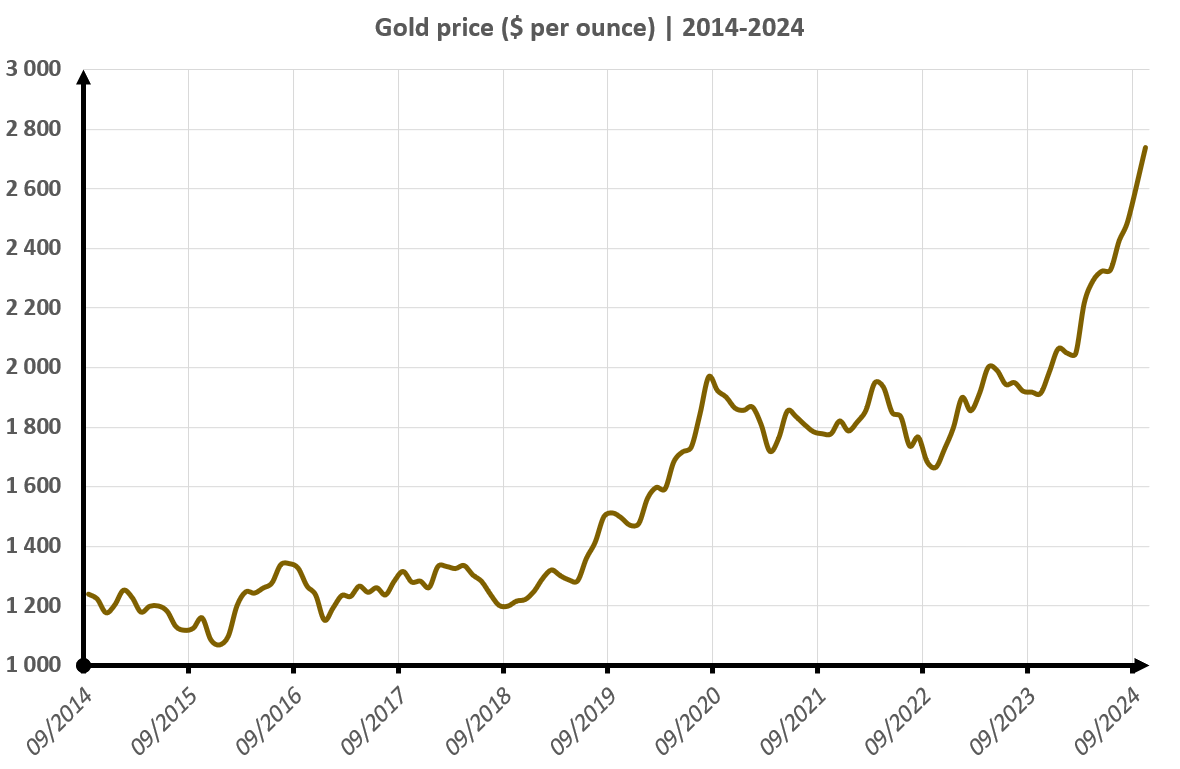
Gold just shattered another milestone, surging past $5,200 per ounce this week. The precious metal that many dismissed as a relic has delivered a stunning 60% gain over the past year, leaving traditional investments in the dust. But here's the twist: according to major Wall Street banks, this rally is just getting started.
The Numbers Tell a Remarkable Story
The current gold price of $5,156 represents more than just another record high. It reflects a fundamental shift in how investors view risk and value in an increasingly uncertain world. From a previous close of $5,227, today's trading shows the typical volatility that accompanies major breakouts.
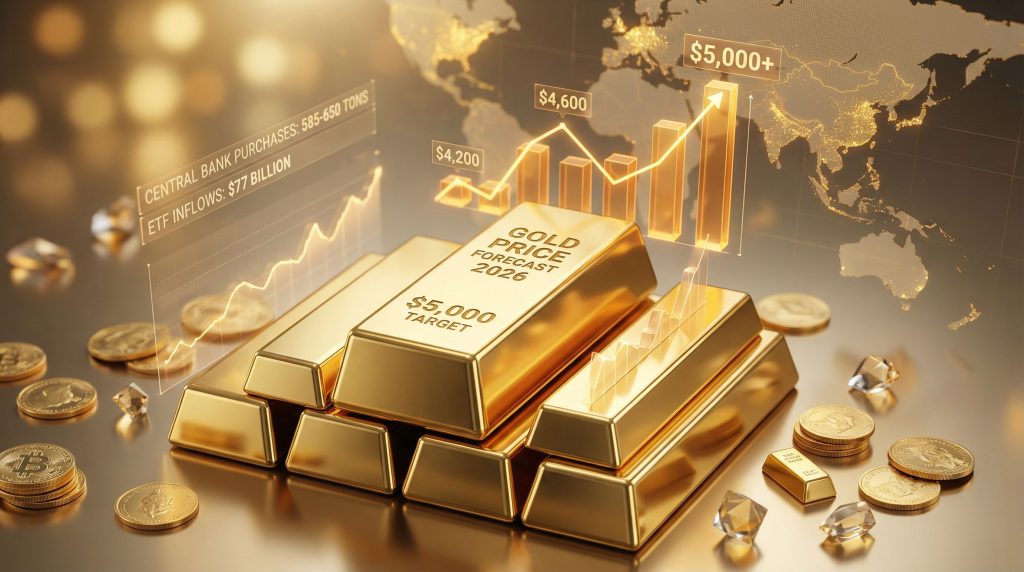
But the real story lies in what's coming next. Yardeni Research has set an ambitious price target of $6,000 per ounce for 2026. Goldman Sachs forecasts $4,900, while Morgan Stanley expects $4,800 by year-end. Even the most conservative projections see gold trading between $5,000 and $6,000 throughout 2026.
The London Bullion Market Association's annual survey reveals analysts projecting gold could reach as high as $7,150, with an average of $4,742 in 2026. These aren't fringe predictions. They represent the collective wisdom of institutions that move billions in precious metals markets daily.
Central Banks Are Hoarding Gold Like Never Before
The most significant driver behind gold's surge isn't retail investors or hedge funds. It's central banks themselves. For the past several years, central banks worldwide have dramatically increased their gold reserves, treating the metal as essential infrastructure rather than an investment.
This buying represents a structural shift. Central banks now purchase gold directly from domestic mines, reducing supply available to commercial markets. The Central Bank of Madagascar recently announced such a program, joining a growing list of nations prioritizing gold accumulation.
Central bank gold buying has become a key driver of prices, creating sustained demand that supports higher valuations regardless of short-term market fluctuations.
This institutional demand creates a price floor that didn't exist in previous decades. When governments treat gold as a strategic asset, it fundamentally changes market dynamics. Supply becomes constrained while demand remains consistent, creating upward pressure on prices.
The Federal Reserve's Unintended Gold Bull Market
Federal Reserve policy has created ideal conditions for gold appreciation, even as officials likely never intended this outcome. Lower interest rates reduce the opportunity cost of holding non-yielding assets like gold. When real interest rates turn negative after accounting for inflation, gold becomes relatively attractive.
The Fed's quantitative easing programs have additional effects. Currency devaluation makes dollar-denominated gold more expensive in local currencies worldwide, driving international demand. Rising inflation expectations, whether realized or anticipated, push investors toward traditional hedges.
UBS analysts note that the Fed's easing regime should continue supporting gold prices through 2026. A weaker US dollar combined with lower real interest rates creates a supportive environment for precious metals. This isn't speculation. It's basic monetary mechanics.
Geopolitical Tensions Fuel Safe-Haven Demand
Global uncertainty has reached levels not seen since the Cold War. From trade disputes to military conflicts, international tensions create sustained demand for assets viewed as stores of value during turbulent times. Gold fits this role perfectly.
Recent geopolitical events have triggered temporary spikes in volatility, supporting demand for portfolio hedges. While these events don't typically have lasting impacts on global markets, they create windows where gold significantly outperforms traditional assets.
The trend toward de-dollarization among major economies adds another layer of support. Countries seeking alternatives to dollar-denominated reserves increasingly turn to gold as a politically neutral store of value. This structural shift could support higher prices for years to come.
Technical Analysis Points to Continued Strength
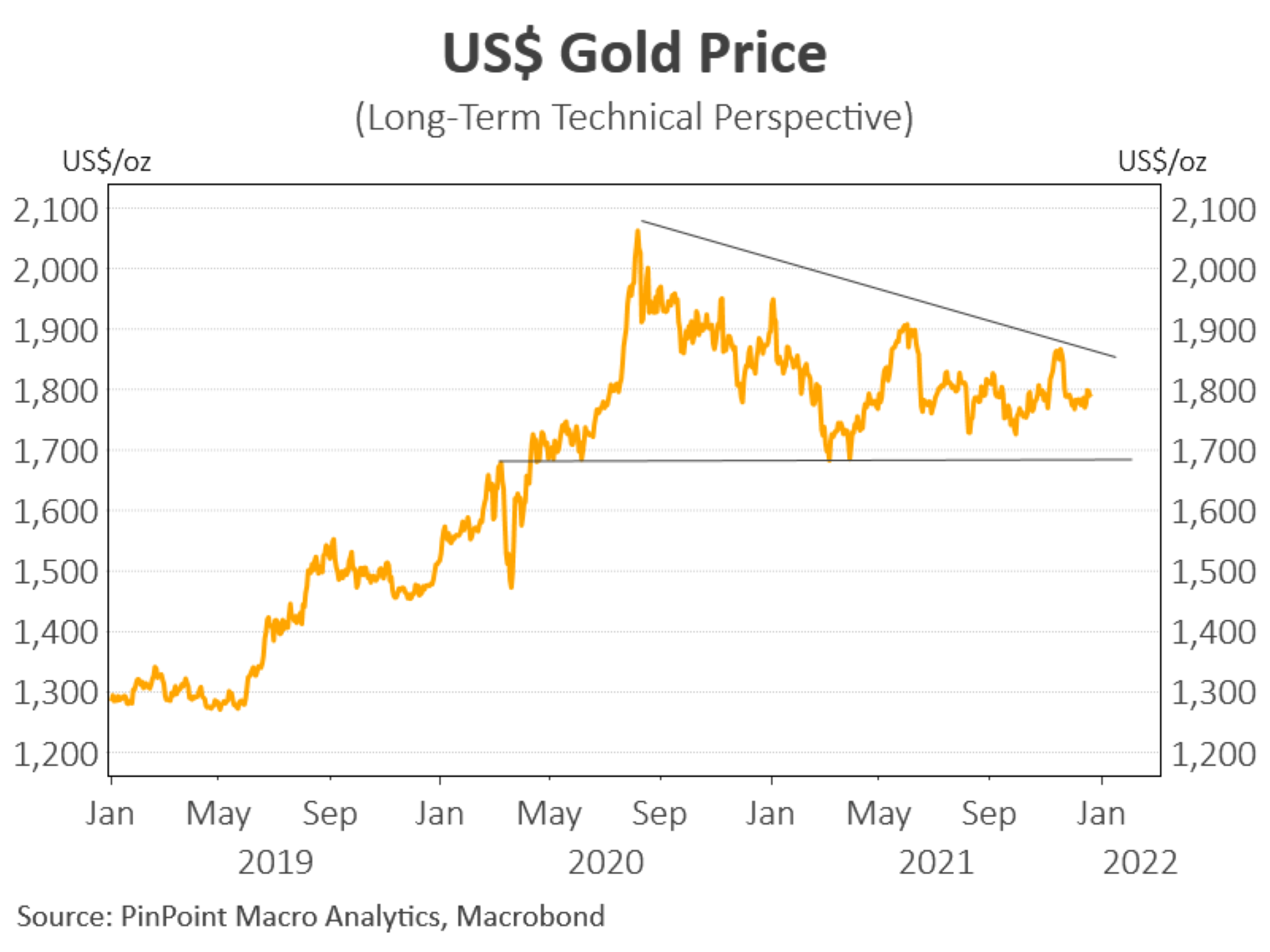
From a technical perspective, gold's chart shows classic breakout behavior. The metal has broken through multiple resistance levels that previously capped gains. Support now lies at $2,530-$2,500, providing a substantial cushion below current prices.
The RSI indicator recently hit its lowest level since February, suggesting the recent pullback was healthy profit-taking rather than a trend reversal. Moving averages remain strongly bullish across multiple timeframes, indicating the underlying uptrend remains intact.
AI-powered forecasting models from CoPilot project gold could reach $6,220 per ounce by 2026, representing the most bullish automated prediction available. While artificial intelligence shouldn't replace human analysis, these models process vast amounts of data that humans might miss.
The Investment Case for Gold in 2026
Despite gold's remarkable gains, multiple analysts believe the rally has room to continue. Only one of eleven surveyed analysts, Nicky Shiels at MKS Pamp, forecasts further gains from current levels, predicting gold could reach $5,000. This conservative outlook suggests either significant upside potential or dangerous overvaluation.
The investment case rests on several pillars. Structural factors like government debt levels continue deteriorating, supporting gold as an alternative store of value. Inflation remains above historical norms in many developed economies. Central bank buying shows no signs of slowing.
Silver and platinum are expected to benefit from gold's strength while adding industrial demand components. Silver particularly benefits from renewable energy applications, while platinum faces supply constraints that could support higher prices.
Most analyst forecasts project stable to higher prices, with consensus expecting gold to trade between $5,000 and $6,000 for much of 2026.
For investors considering gold exposure, historical patterns suggest buying during periods of uncertainty has proven profitable over time. Whether through physical gold, ETFs, or mining stocks, the precious metals complex offers diversification benefits that become more valuable as traditional correlations break down.
The question isn't whether gold will continue rising. Multiple fundamental drivers support higher prices through 2026. The question is how high prices can go before creating their own headwinds. At current levels, gold has entered uncharted territory where technical analysis provides limited guidance and fundamental analysis becomes paramount.