The Glyphosate U-Turn That Broke the Natural Food Movement
How RFK Jr.'s betrayal of his own followers revealed that America's 'clean eating' crusade was never really about health at all
Robert F. Kennedy Jr. spent two decades building his reputation as America's most prominent pesticide warrior. He sued Monsanto. He testified before Congress about glyphosate's dangers. He promised to "Make America Healthy Again" by ridding our food system of toxic chemicals. Then, on February 14, 2026, he defended a Trump executive order designed to boost glyphosate production.

The backlash was swift and brutal. Environmental Working Group called it a "betrayal." His own MAHA supporters flooded social media with accusations of selling out. But Kennedy doubled down, telling Joe Rogan he wasn't "particularly happy" with the order but defended it as necessary for food security.
This wasn't just a political flip-flop. It was the moment that exposed the fundamental contradiction at the heart of America's natural food movement.
The Science That Nobody Actually Wanted to Follow
For all the passion around glyphosate, the scientific consensus has remained remarkably stable. The EPA's most recent assessment in 2022 concluded the herbicide is "not likely to be carcinogenic to humans." The European Food Safety Authority reached the same conclusion. Even the International Agency for Research on Cancer, which classified glyphosate as "probably carcinogenic" in 2015, based that finding on "limited" evidence from human studies.
More than 1,500 studies spanning 50 years have examined glyphosate's safety. The Agricultural Health Study, which tracked 57,000 farmers for decades, found no association between glyphosate use and cancer rates. A 2019 comprehensive review in Environmental Epidemiology noted that while IARC's classification grabbed headlines, it "does not adequately capture the scope of this chemical's harms to humans" precisely because the evidence for those harms remains thin.
None of this mattered to the natural food movement. Glyphosate became their perfect villain, the chemical embodiment of everything wrong with industrial agriculture. It was ubiquitous, manufactured by the hated Monsanto, and linked to genetically modified crops.
"If anyone still wondered whether 'Make America Healthy Again' was a genuine commitment to public health or a scam concocted by President Trump and RFK Jr. to rally health-conscious voters in 2024, the administration's ramping up glyphosate production provides the answer."
The movement thrived on fear, not facts. Organic food sales surged from $3.4 billion in 1997 to over $50 billion by 2020, driven largely by pesticide anxiety. Companies like Whole Foods built empires selling "clean" alternatives to consumers terrified of trace chemical residues.
When Politics Trumps Principles
Kennedy's glyphosate reversal reveals something uncomfortable about the natural food movement's true priorities. When forced to choose between ideological purity and political power, the movement's supposed champion chose power.

The Trump administration's executive order wasn't subtle. It explicitly aimed to increase domestic glyphosate production, citing national security concerns about relying on Chinese manufacturers. For Kennedy, defending this policy required abandoning years of anti-pesticide rhetoric.
His explanation on Joe Rogan's podcast was telling. Kennedy argued that "changing course without ruining the food supply" required compromise. But this pragmatic approach directly contradicted his previous absolutist stance. In 2023, Kennedy had promised to "get glyphosate out of our food supply immediately." By 2026, he was defending its increased production.
The MAHA movement's response exposed its own contradictions. Many supporters who had rallied around Kennedy's anti-establishment message suddenly found themselves defending establishment agricultural policy. Others abandoned the movement entirely, recognizing that their health concerns had become subordinate to partisan politics.
The Real Food Fraud
The glyphosate controversy illuminates a deeper truth about America's relationship with food and fear. The natural food movement succeeded not by improving public health outcomes, but by monetizing anxiety about invisible threats.
Consider the numbers. Despite decades of increasing pesticide use, cancer rates have generally declined since the 1990s. Life expectancy increased steadily until the COVID-19 pandemic. Meanwhile, the organic food industry's marketing budget topped $100 million annually, largely spent convincing consumers that conventional farming was poisoning them.
West Virginia became the first state to ban artificial food dyes in March 2025, part of the MAHA-inspired state-level activism. Six other states followed with similar restrictions. Yet none of these laws addressed glyphosate, the chemical Kennedy had spent years calling one of the most dangerous in our food supply.

The selective focus reveals the movement's true nature. Food dyes are visible, easily avoided, and symbolically powerful. Glyphosate is invisible, scientifically complex, and economically essential. When forced to confront agricultural reality, the movement chose symbolic victories over substantive change.
The Agriculture Reality Check
Kennedy's glyphosate defense reflected an uncomfortable truth that the natural food movement has long ignored: modern agriculture depends on chemicals because feeding 330 million Americans requires industrial-scale efficiency.
Organic farming typically requires 20-40% more land to produce equivalent yields compared to conventional methods. A complete transition to organic agriculture would necessitate either massive increases in farmland or significant reductions in food availability. Neither option aligns with food security goals.
The Trump administration's executive order acknowledged this reality. With global supply chains disrupted and agricultural exports weaponized in international conflicts, domestic food production became a national security priority. Glyphosate enables American farmers to maximize yields on existing farmland.
Kennedy's pragmatic response suggested he understood these constraints once in power. But his followers, raised on promises of chemical-free agriculture, felt betrayed by this newfound realism.
The Movement's Hollow Core
The MAHA backlash revealed something profound about contemporary political movements. Supporters who genuinely believed in Kennedy's health mission found themselves abandoned when political expediency required compromise. Those who remained were motivated less by health concerns than by tribal loyalty.
The natural food movement succeeded not by improving public health outcomes, but by monetizing anxiety about invisible threats.
This pattern extends beyond food policy. The movement's focus on individual consumer choices rather than systemic change always served corporate interests more than public health. Telling affluent consumers to buy organic products is easier than addressing poverty, food deserts, or agricultural subsidies.
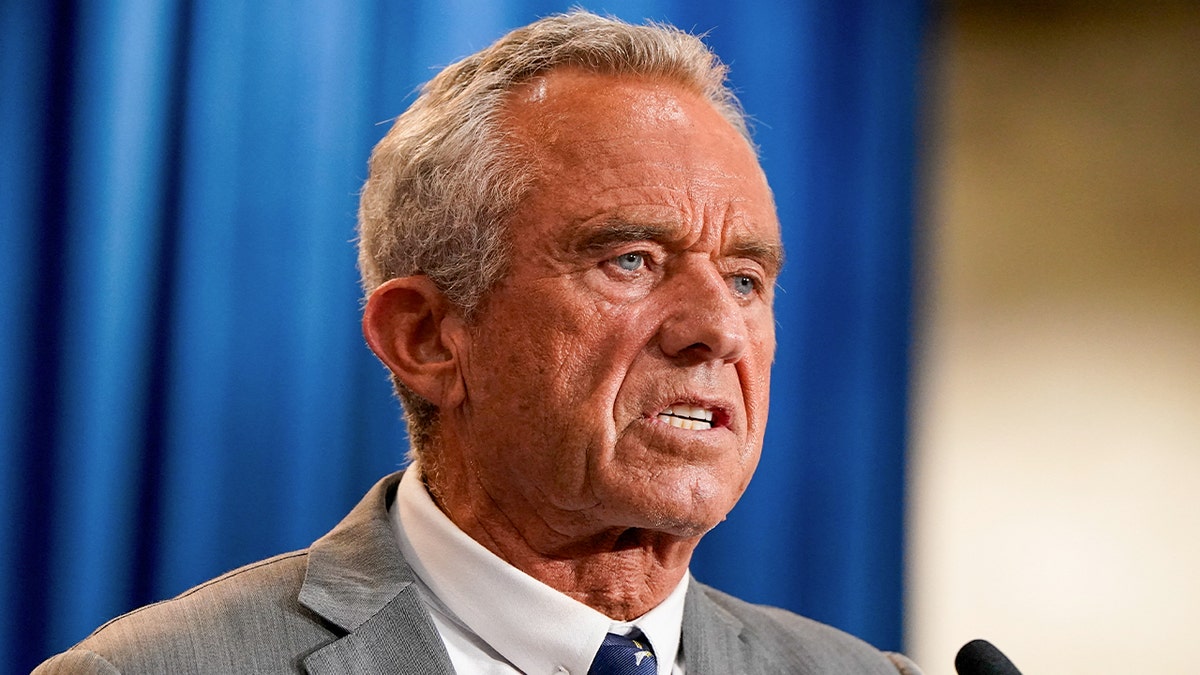
Kennedy's transformation from outsider activist to government administrator forced these contradictions into the open. The same supporters who cheered his attacks on regulatory capture suddenly supported his defense of agricultural industry interests.
The glyphosate reversal wasn't Kennedy's first compromise. His MAHA agenda quietly dropped vaccine restrictions, softened processed food regulations, and accepted industry-friendly implementation timelines. Each concession revealed that the movement's radical rhetoric was always more performative than principled.
What Dies When Movements Sell Out
Kennedy's glyphosate defense marks the end of the natural food movement as a genuine health advocacy force. What remains is a hollow brand, useful for selling products and winning elections but divorced from its original mission.
The real tragedy isn't Kennedy's personal evolution from activist to politician. It's that millions of Americans who wanted healthier food options discovered their champion was never really fighting for them.
The path forward requires abandoning the movement's fear-based messaging and embracing evidence-based policy. This means supporting agricultural research that can reduce pesticide use without sacrificing yields. It means addressing food access and affordability rather than demonizing specific chemicals. It means recognizing that feeding America sustainably requires nuanced solutions, not absolutist positions.
The natural food movement promised to make America healthier. Instead, it created a generation of consumers anxious about invisible threats while ignoring visible problems like food insecurity and nutritional inequality. Kennedy's glyphosate reversal simply made this failure impossible to ignore.
The question now is whether anything genuine can emerge from the movement's wreckage, or whether America's food politics will remain forever trapped between corporate interests and performative activism.