The Death of Khamenei: How Unconfirmed Reports Expose Iran's Succession Crisis
Israeli claims of the Supreme Leader's assassination reveal the fragility of Iran's power structure and the chaos that would follow his death.
On February 28, 2026, Israeli officials made an extraordinary claim: Iran's Supreme Leader Ayatollah Ali Khamenei was dead, killed in a joint U.S.-Israeli military operation targeting his compound in Tehran. Within hours, the story dominated headlines from CNN to CBS News, yet neither Iran nor the United States had confirmed the 86-year-old leader's death.
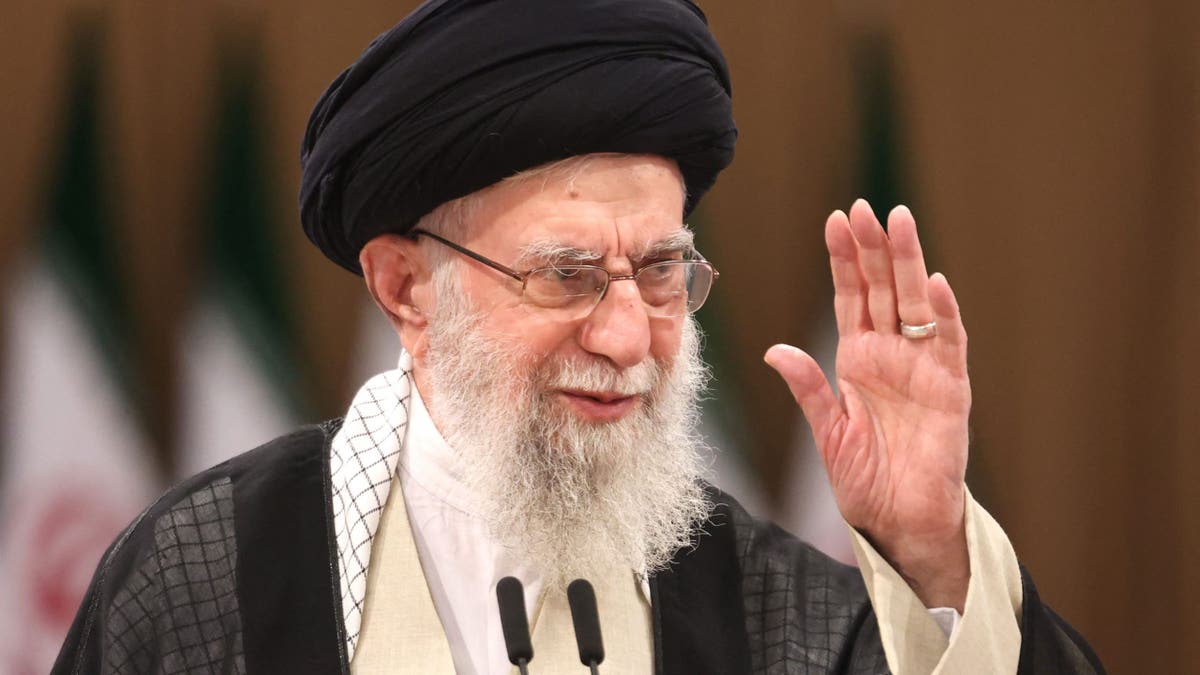
The confusion surrounding these reports illuminates a deeper truth about Iran's theocratic system: it remains wholly dependent on one man whose death would trigger the most significant political crisis in the Islamic Republic's 47-year history.
The Fog of War and Information
Multiple Israeli sources told major news outlets that Khamenei died when strikes hit near his offices in Tehran. According to reports from Axios and the Jerusalem Post, the Supreme Leader's body was found under rubble following the coordinated attack.
Yet Iran's foreign minister quickly pushed back, stating Khamenei was "still alive, as far as I know." Reuters reported that Iranian security forces had moved the Supreme Leader to a secure location outside Tehran before the strikes began.
This information vacuum isn't accidental. Iran's government operates with extreme opacity around its leadership's health and whereabouts. The regime learned from the chaos that followed Ayatollah Ruhollah Khomeini's death in 1989, when succession uncertainty briefly threatened the system's stability.
The mere circulation of these reports, true or false, demonstrates how vulnerable Iran's power structure remains to any disruption of its supreme leadership.
A System Built Around One Man
Iran's constitution grants the Supreme Leader absolute authority over foreign policy, the military, and the judiciary. Unlike other authoritarian systems with collective leadership or clear succession mechanisms, the Islamic Republic concentrates unprecedented power in a single individual.
Khamenei's death could result in the regime and its security forces closing ranks in order to survive, or it could serve as the equivalent of a catalyst for broader political change.
This concentration creates what experts call an "existential vulnerability." The sudden death of Iranian President Ebrahim Raisi in a helicopter crash already demonstrated how quickly succession crises can emerge in Iran's system, even for positions with less absolute power than the Supreme Leader.
The New York Times reported in February 2026 that Khamenei had drawn up contingency plans amid assassination fears, including naming layers of successors and delegating decision-making powers to a small inner circle if communications were disrupted. These preparations acknowledge what the regime fears most: the system cannot function without him.

The Mojtaba Question
Iran's succession crisis extends beyond constitutional procedures to family dynasty. Analysts widely expect Khamenei's son, Mojtaba Khamenei, to emerge as the leading candidate to succeed his father, despite having no official government position.
Mojtaba operates behind the scenes, managing his father's office and wielding significant influence over appointments and policy. His potential succession would transform Iran from a theocratic republic into something resembling a hereditary monarchy, fundamentally altering the ideological foundations of the 1979 revolution.
This dynastic transition faces significant obstacles. The Assembly of Experts, an 88-member clerical body responsible for selecting the Supreme Leader, includes many members who oppose hereditary succession on religious and political grounds.
Public opposition could prove even more challenging. Iranian society has grown increasingly secular and educated over four decades of theocratic rule. A succession crisis might provide the opening that opposition movements need to challenge the entire system.
Regional Implications of Leadership Vacuum
Iran's regional influence depends heavily on the Supreme Leader's direct control over foreign policy and proxy relationships. Khamenei personally manages Iran's "Axis of Resistance," coordinating support for Hezbollah in Lebanon, Hamas in Gaza, the Houthis in Yemen, and various Shia militias across the Middle East.
A succession crisis would immediately weaken these relationships. Proxy groups rely on consistent funding, weapons, and strategic direction from Tehran. Any disruption in supreme leadership could fragment this network, fundamentally altering regional power balances.
Israel and Saudi Arabia would likely view a succession crisis as an opportunity to roll back Iranian influence. Both countries have prepared contingency plans for scenarios involving Khamenei's sudden death or incapacitation.
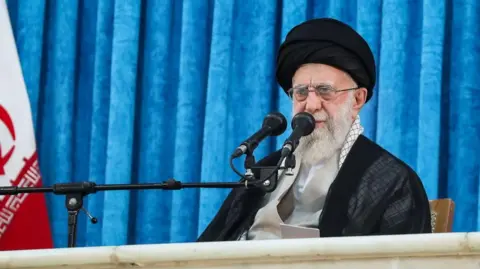
The nuclear program presents another critical variable. Khamenei has maintained final authority over nuclear policy since the program's inception. His death could either accelerate Iran's weapons development, as hardliners seek to strengthen their position, or create openings for diplomatic solutions if more pragmatic leaders gain influence.
What Comes Next
Whether or not Khamenei died on February 28, 2026, the confusion surrounding these reports reveals the Islamic Republic's fundamental weakness: it has built a system that cannot survive its founder's death without potentially catastrophic disruption.
The regime's best-case scenario involves a managed transition to Mojtaba Khamenei or another loyalist who can maintain system continuity. Even this optimal outcome would likely trigger months of political uncertainty, economic instability, and reduced regional influence.
The worst-case scenario resembles the Soviet Union's final years: a succession of elderly, incapacitated leaders presiding over a system losing legitimacy and effectiveness. Iran's younger population, facing economic hardship and social restrictions, might view such weakness as an invitation for revolution.
The death of Iran's Supreme Leader would create the most significant geopolitical shift in the Middle East since the fall of Saddam Hussein.
For now, Iran's foreign minister insists Khamenei remains alive. But the speed with which these death reports spread and gained credibility demonstrates how the world expects, and perhaps hopes for, the end of his 37-year rule.
The Islamic Republic may have survived four decades, but it has never faced the test that ultimately comes for all authoritarian systems: what happens when the strongman dies. Recent events suggest that test may be coming sooner than anyone expected.