Apple's $1 Billion Gemini Deal Reveals the iPhone Maker's AI Desperation
After years of privacy-first marketing, Apple quietly admits it can't compete in AI without Google's help.
Apple just paid Google $1 billion annually to power Siri with Gemini AI. Let that sink in: the company that spent years mocking competitors for sending your data to the cloud now depends entirely on Google's servers to make its voice assistant remotely useful.
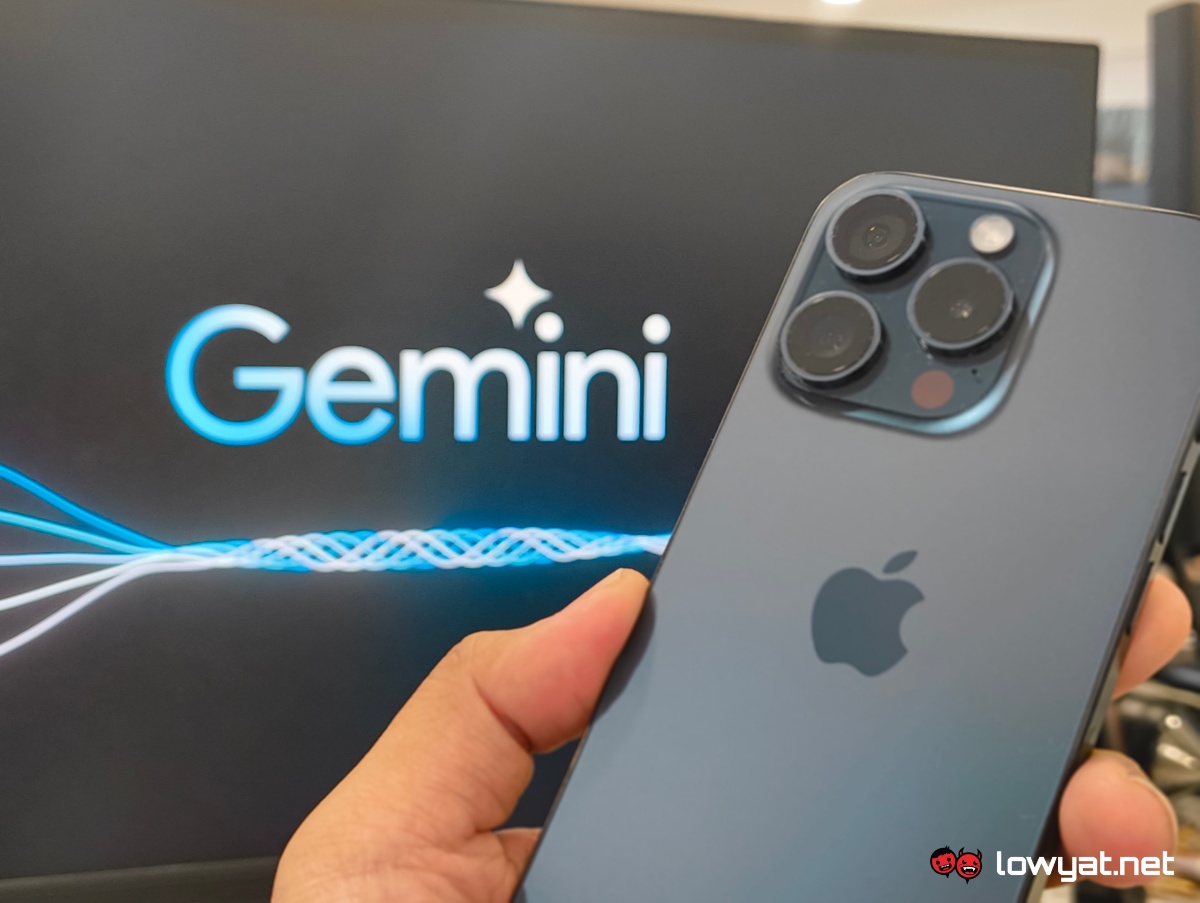
This isn't just another tech partnership. It's Apple admitting something it's never had to admit before: it fundamentally cannot compete in the most important technology category of the decade. The iPhone maker built its reputation on controlling every aspect of the user experience, from chips to software to services. Now it's handing over the brain of that experience to its biggest rival.
The implications go far beyond Siri getting smarter.
The Privacy Paradox That Apple Can't Solve
For years, Apple's marketing machine painted a clear picture: your iPhone keeps your data private because everything happens on-device. Tim Cook regularly positioned Apple as the privacy champion, contrasting it with Google's data-hungry business model. "Privacy is a fundamental human right," became Apple's rallying cry.
The Gemini deal exposes this narrative as incomplete at best, misleading at worst.
Apple Intelligence does run some features locally on newer iPhones. Basic text rewriting, simple photo editing, and notification summaries happen without leaving your device. But anything requiring real intelligence, the kind that makes AI assistants actually useful, now runs on Google's servers through Gemini models.
According to Apple's internal research, the company lags at least 2.5 years behind in generative AI technology. That gap forced a choice: maintain the privacy narrative while offering an inferior product, or compromise on privacy to stay competitive. Apple chose competitiveness.
"This partnership confirms that even Apple, with its $200 billion in cash reserves, cannot close the AI gap through internal development alone."
The irony runs deeper. Apple already integrated ChatGPT into iOS 18, allowing Siri to hand off complex queries to OpenAI's models. Now it's doubling down with Gemini. Your iPhone's intelligence increasingly depends on the same cloud-based systems Apple once criticized as privacy risks.
Why $1 Billion Makes Perfect Sense for Google
Google isn't just getting paid here. It's achieving something worth far more than $1 billion: direct access to iPhone users without Apple's interference.
Think about Google's position. It already pays Apple an estimated $20 billion annually to remain the default search engine in Safari. Now it's paying to power the intelligence behind Siri, Photos, Messages, and other core iOS features. Google is essentially renting space inside Apple's walled garden.
Every query sent to Gemini gives Google insights into iPhone user behavior, preferences, and needs. This data becomes training material for future AI models, creating a feedback loop that makes Google's AI even more powerful. Apple users are unwittingly helping train Google's competitors to Apple's own AI ambitions.
For Google, this deal represents the ultimate platform play. While Apple controls the hardware and basic software, Google increasingly controls the intelligence layer that determines how useful that hardware actually becomes.
The Technical Reality Behind Apple's AI Struggles
Apple's AI challenges aren't just about resources or talent. They're architectural.
Modern AI models require massive training datasets, often scraped from the public internet. Apple's privacy-first approach fundamentally conflicts with this requirement. The company cannot legally or ethically collect the vast amounts of user data that power competitors' AI systems.
Google trains Gemini on search queries, Gmail conversations, YouTube interactions, and countless other data sources across its ecosystem. OpenAI used massive web crawls to train GPT models. Apple has user interactions with Siri and some anonymized usage data, but nothing approaching the scale of its competitors.
The computational requirements compound the problem. Training state-of-the-art AI models costs hundreds of millions of dollars and requires specialized infrastructure that Apple simply doesn't have at the necessary scale. Google and Microsoft have been building this infrastructure for over a decade.
"Apple recognized a structural truth: every AI interaction must eventually reach a human through a device. Control the device layer, control the chokepoint."
Apple's response has been what analysts call "Device-Layer Control Inversion." Instead of competing directly in AI model development, Apple focuses on controlling how AI reaches users. This strategy works only if the AI powering those interactions actually works well enough to keep users engaged.
What This Means for Your Next iPhone
The Gemini partnership fundamentally changes what an iPhone actually is. Your next iPhone isn't just an Apple device anymore. It's a Google-powered AI terminal that happens to run iOS.
This shift has immediate practical implications. Siri will finally be able to hold contextual conversations, understand complex queries, and provide genuinely helpful responses. But those capabilities come with a hidden cost: your interactions with your iPhone's intelligence now flow through Google's servers.
Apple promises that queries sent to Gemini are anonymized and not stored long-term. But Google's privacy policies, not Apple's, ultimately govern how that data gets handled. The company that built its brand on privacy is now asking users to trust Google with their most intimate digital interactions.
The partnership also creates new dependencies. If Google decides to change its terms, increase prices, or prioritize its own Pixel devices, Apple has limited alternatives. OpenAI and Anthropic could fill the gap, but that just shifts the dependency to another external provider.
Perhaps most significantly, this deal signals that AI will increasingly determine smartphone value. Features like camera quality, battery life, and build materials become secondary to how intelligently your phone can understand and respond to your needs. Apple has effectively admitted it cannot deliver that intelligence independently.
The Broader Implications for Big Tech
Apple's capitulation in AI represents a seismic shift in the technology industry's power dynamics. For the first time since the iPhone's launch, Apple is not setting the terms for a fundamental technology category.
The deal validates Google's massive investments in AI infrastructure and research. While Apple hoarded cash and focused on incremental hardware improvements, Google built the foundation for the next computing paradigm. Now Apple must pay handsomely to access that foundation.
Other technology companies are watching closely. If Apple, with its resources and market position, cannot compete independently in AI, what hope do smaller players have? The AI industry is rapidly consolidating around a few major providers: OpenAI, Google, Anthropic, and Meta.
This consolidation has profound implications for innovation and competition. When the world's most valuable company becomes dependent on a competitor's AI, it signals that AI development requires resources and capabilities that even tech giants struggle to develop independently.
The partnership also highlights the growing separation between AI development and AI deployment. Companies increasingly focus on either building AI models or figuring out how to integrate them into consumer products, but rarely both. Apple has chosen the latter path, essentially conceding the former to Google and others.
What Happens Next
Apple's Gemini deal is likely just the beginning of a broader industry restructuring around AI dependencies. Expect to see more partnerships where hardware companies license AI capabilities from specialized providers rather than developing them internally.
The immediate question is whether Apple users will notice or care about this fundamental shift. Early signs suggest they won't, as long as Siri becomes genuinely useful. Consumer loyalty to Apple's ecosystem may override concerns about AI providers running behind the scenes.
But the long-term implications are harder to predict. Apple has built its premium pricing on the promise of superior, integrated experiences. If the most important parts of that experience increasingly depend on external providers, what justifies the Apple tax?
The company still controls crucial elements: the hardware, operating system, app ecosystem, and user interface. But if AI becomes the primary way users interact with their devices, Google's influence over the iPhone experience will only grow.
Apple's next challenge is maintaining some level of AI independence while benefiting from Google's capabilities. The company continues investing in its own AI research and development, but closing a 2.5-year gap against well-funded competitors will require either breakthrough innovations or massive resource commitments.
For iPhone users, the immediate future looks brighter. Siri will finally work as promised, and AI features will become genuinely useful rather than frustrating tech demos. The cost is philosophical: the iPhone is no longer a purely Apple product, but a hybrid creation that depends on Google for its most advanced capabilities.
The $1 billion Gemini deal marks the end of Apple's AI independence and the beginning of a new era where even the world's most powerful technology company must rely on competitors to deliver on its promises. Your next iPhone will be smarter than ever. It just won't be as purely Apple as you might think.