Airlines Are Bleeding Money Into Your Wallet Right Now
Post-election panic has triggered a wave of mistake fares and desperation pricing that savvy travelers can exploit before the market corrects itself.
While business jet activity surged 3% above last year's levels after the November election, commercial airlines are facing the opposite reality. Major carriers are slashing prices with the desperation of a closing-time bar, creating a perfect storm of mistake fares and rock-bottom pricing that hasn't been seen since the early pandemic days.

The numbers tell a stark story. Airlines spotted 16 major mistake fares in just the first few weeks of 2025, with savings reaching up to 90% on routes that would normally cost thousands. These aren't small regional carriers making errors. Major airlines are accidentally publishing fares that their revenue management systems should have caught, suggesting deeper problems with their pricing algorithms.
The Post-Election Demand Collapse Nobody Saw Coming
Airlines built their 2025 capacity plans on the assumption that political uncertainty would drive leisure travel demand. Instead, the opposite happened. Business travelers who normally book last-minute premium seats are increasingly choosing private jets, while leisure travelers are postponing international trips amid economic uncertainty.
The disparity is striking: NetJets and Flexjet reported strong post-election bookings while commercial airlines watched their premium cabins empty out. This shift forced airlines into panic mode, with revenue management teams scrambling to fill seats at any price.
McKinsey's latest analysis suggests airlines could unlock $45 billion in additional value through better pricing strategies, but right now they're bleeding that potential revenue through desperation discounting. The gap between what airlines want to charge and what travelers will pay has never been wider.

How Mistake Fares Actually Happen
Mistake fares aren't just random glitches. They're systematic failures in increasingly complex pricing systems that airlines use to maximize revenue. When currency conversion errors, decimal point mistakes, or algorithm bugs occur, the results can slash ticket prices by thousands of dollars.
The most common triggers include human error during fare loading, technical glitches in booking systems, and currency conversion mistakes when international routes are priced. What's changed in 2025 is the frequency. Airlines are updating prices so aggressively that their quality control systems can't keep up.
Airlines are updating prices 3 million times per day across all routes, and quality control systems simply can't flag every anomaly when the entire market is in chaos.
The legal reality is simple: if you book a mistake fare and receive a confirmation, airlines are generally required to honor it. The Department of Transportation's 24-hour rule protects consumers, though airlines can cancel tickets for "manifest errors" in some cases.
The Three Airlines Most Likely to Drop Prices Further
Based on current capacity data and recent pricing patterns, three carriers stand out as prime candidates for additional price drops over the next 30 days.
United Airlines has the most aggressive dynamic pricing system and the highest exposure to business travel routes that are underperforming. Their transpacific routes, particularly to Asia, are seeing load factors below 70% when they typically run at 85%. Expect flash sales and mistake fares on premium routes as they try to fill business class seats.
American Airlines is dealing with the double hit of reduced corporate travel and increased competition on domestic routes. Their revenue management team has been particularly aggressive with last-minute pricing, creating opportunities for both legitimate deals and system errors. Watch for deals on transcontinental routes and international destinations from their hub cities.
Delta has historically been more conservative with pricing, but their premium positioning is working against them in the current market. When leisure travelers are prioritizing price over service, Delta's premium pricing strategy leaves them vulnerable to demand shocks. Their international routes from Atlanta and Seattle are most likely to see significant price reductions.
Specific Deals Worth Booking Today
The current environment has produced several categories of deals that smart travelers should prioritize. International flights for March and April departure are seeing the steepest discounts, with some European routes priced 60% below normal levels.
Transcontinental flights within the U.S. are particularly vulnerable to mistake pricing. Routes like Los Angeles to New York, typically $400-600 roundtrip in economy, have appeared at $180-220 multiple times in recent weeks. The key is booking quickly when these fares appear.
Premium cabin deals represent the biggest opportunity. Business class seats to Europe that normally cost $3,000-5,000 are appearing at $800-1,200 due to both legitimate sales and pricing errors. These deals typically last only hours before correction.
Asian routes are seeing similar patterns, with airlines desperate to fill capacity as business travel remains depressed. Singapore, Tokyo, and Hong Kong routes from major U.S. hubs are prime targets for both mistake fares and legitimate deep discounts.
How to Actually Catch These Deals
Timing matters more than tools. Mistake fares typically appear between 1 AM and 5 AM Eastern time when airline pricing teams are updating systems with minimal oversight. Set up fare alerts for routes you're interested in, but check them manually during these overnight hours.
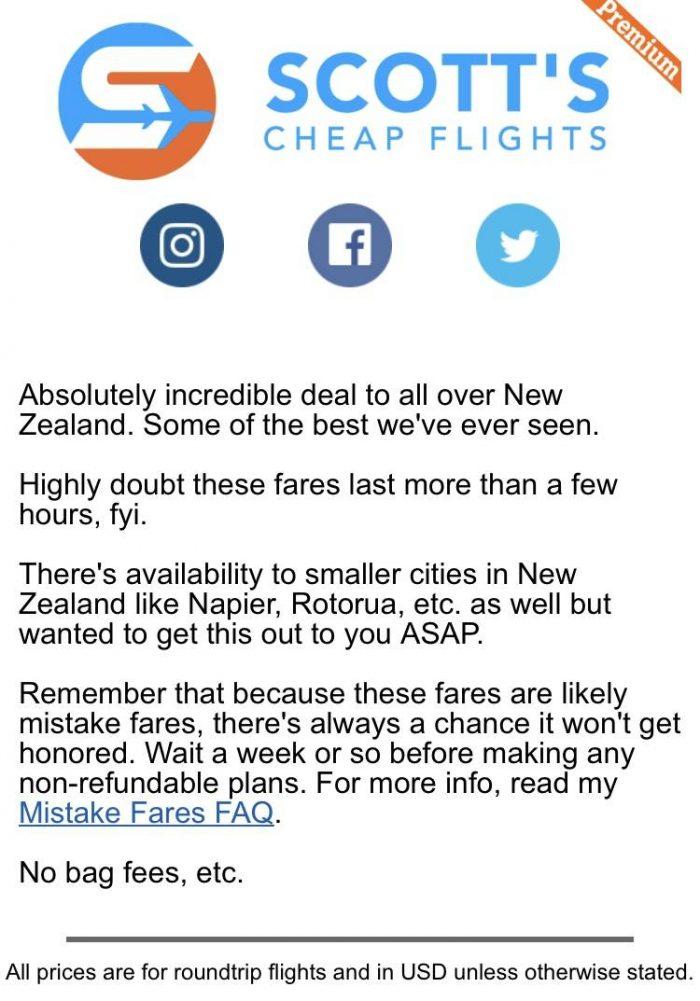
Book first, ask questions later. When you spot a fare that seems too good to be true, complete the booking immediately. You have 24 hours to cancel without penalty if you change your mind, but mistake fares are usually corrected within hours of appearing.
The average mistake fare survives only 4-6 hours before correction, so hesitation kills deals more often than booking systems.
Use multiple booking channels. Sometimes mistake fares appear on airline websites but not on third-party sites, or vice versa. Google Flights, Kayak, and airline direct sites can show different prices for the same flight due to system sync delays.
The Window Is Closing
This pricing chaos won't last forever. Airlines are already implementing better quality control systems and adjusting their revenue management strategies for the new reality of post-election travel demand. Industry experts predict the mistake fare frequency will normalize by late February as systems stabilize.
The broader trend toward dynamic pricing and AI-driven revenue management will eventually make mistake fares rarer, but right now the technology is working against airlines. Their systems can't adapt fast enough to rapidly changing demand patterns, creating opportunities for travelers willing to act quickly.
For the next 30 days, treat every fare alert as urgent. Check overnight price updates manually. Book immediately when something looks wrong. The current market conditions have created a brief window where airlines' desperation is your opportunity, but that window is closing as systems adapt and demand stabilizes.