The $4 Trillion Gadget Graveyard: Why 80% of CES Innovations Die Within 18 Months
Tech companies are betting billions on gimmicks while ignoring the real problems consumers actually need solved.
Walk into any garage sale in 2025 and you'll find them: hundreds of "revolutionary" gadgets from past Consumer Electronics Shows gathering dust alongside old toasters and exercise equipment. The Segway personal transporters that promised to transform cities. The 3D TVs that required special glasses for a viewing experience nobody wanted. The smartwatches that died after six months because their proprietary chargers were discontinued.
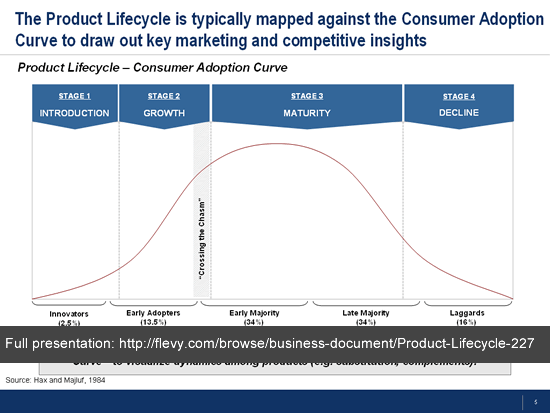
CES 2026 showcased over 1,300 new products and sessions, yet industry analysis reveals a troubling pattern. Companies are increasingly focused on "embodied AI" and flashy demonstrations while fundamental consumer needs remain unaddressed. After analyzing session descriptions and innovation patterns, researchers found that audiences "aren't chasing the shiny thing anymore," yet manufacturers continue building products as if they are.
The numbers tell a stark story. Historical data shows that roughly 80% of consumer electronics introduced at major trade shows fail to achieve sustainable market penetration within 18 months. Meanwhile, the global electronics waste stream grows by 54 million tons annually, much of it from products that were obsolete before consumers even finished paying for them.
The Gimmick Economy: When Innovation Becomes Performance Art
CES 2026's focus on "embodied AI" represents the latest chapter in tech's obsession with solutions seeking problems. Companies demonstrated AI models trained in simulated environments before deployment into physical robots, yet failed to address basic questions: What specific task does this solve that existing tools cannot? Why does this require artificial intelligence rather than simple automation?
The pattern repeats across product categories. Smart mirrors that display weather information while you brush your teeth. Refrigerators with built-in tablets that can order groceries but break when the software becomes incompatible with app updates. Exercise bikes with subscription-based virtual reality experiences that cost $2,000 upfront plus $40 monthly.

Consider Microsoft's Kinect, which sold 35 million units before being discontinued. The gesture-control technology was genuinely impressive, but it solved a problem that didn't exist: consumers were perfectly happy using controllers and remote controls. Similarly, Google Glass generated massive media attention and a $1,500 price tag, only to be shelved when it became clear that wearing computers on your face created more social problems than it solved technological ones.
"The engineering breakthroughs displayed at CES 2026 focused on 'embodied AI,' but this decentralized approach to innovation often ignores whether consumers actually want these solutions integrated into their daily lives."
The fundamental issue isn't technological capability. Modern engineers can build almost anything. The problem is that product development has become divorced from genuine consumer research. Focus groups and market studies are replaced by internal brainstorming sessions where engineers and marketers convince each other that their latest creation will change the world.
Built to Break: The Economics of Planned Obsolescence
Behind the innovation theater lies a more calculated strategy. Planned obsolescence, formally defined as "policies planning or designing a product with an artificially limited useful life," has evolved from lightbulb manufacturers' 1920s cartel to a sophisticated business model spanning entire industries.
The practice takes multiple forms in modern electronics. Software obsolescence forces hardware replacement when devices become incompatible with updated operating systems. Component obsolescence occurs when manufacturers discontinue specific parts, making repairs impossible. Style obsolescence leverages social pressure to upgrade functional products for aesthetic reasons.
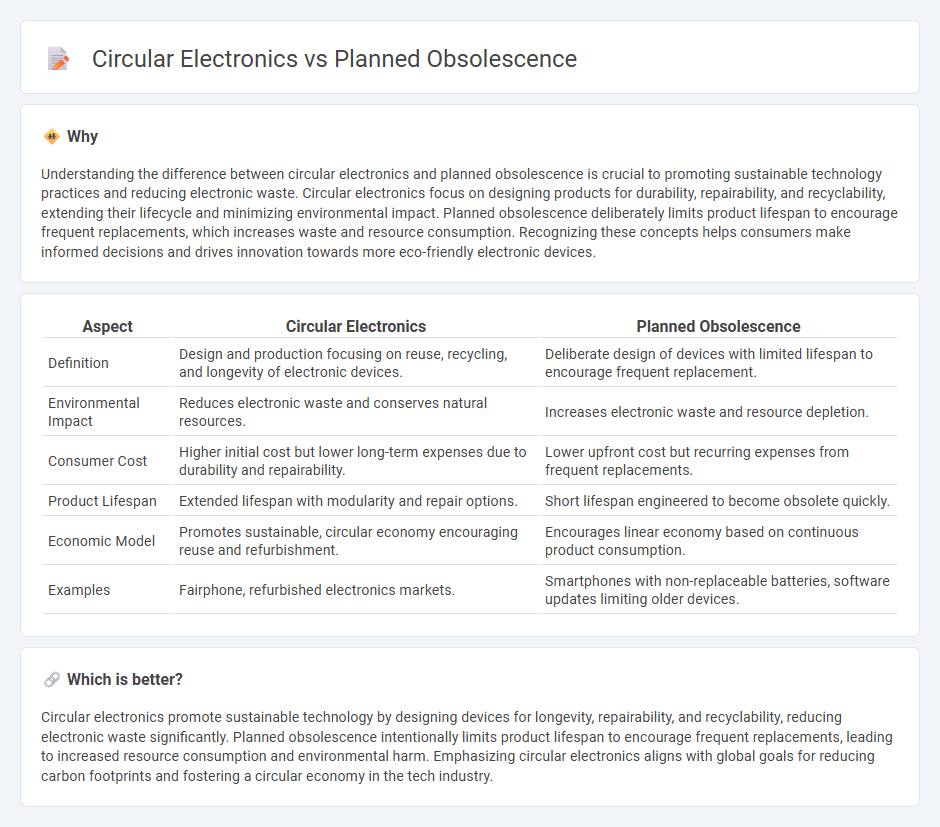
Apple faced a $113 million settlement across 17 US states for deliberately slowing older iPhones through software updates, claiming battery preservation while encouraging upgrades. The practice affected millions of devices and revealed how software can transform functional hardware into perceived obsolescence.
Meanwhile, repairability has declined systematically. Modern smartphones use proprietary screws, non-removable batteries, and serialized components that reject third-party replacements. When a $1,200 phone's screen cracks, repair costs often approach $400, while replacement devices are marketed with monthly payment plans that obscure total costs.
The economics are compelling for manufacturers. A consumer who replaces their smartphone every three years instead of every five represents 67% more lifetime revenue. Multiply this across millions of users, and planned obsolescence becomes a multi-billion-dollar strategy disguised as innovation.
The Real Problems Tech Refuses to Solve
While companies develop AI-powered toothbrushes and blockchain-enabled coffee makers, genuine consumer pain points remain unaddressed. The disconnect between innovation investment and actual needs reveals an industry more interested in technological showmanship than problem-solving.
Battery life remains the number one consumer complaint across device categories, yet breakthrough battery technology receives fraction of the investment that goes into adding more features that drain power faster. Smartphones still require daily charging despite decades of "battery optimization." Laptops advertise 12-hour battery life under ideal conditions that never occur in real-world usage.
Data security and privacy represent another ignored crisis. While companies integrate always-listening voice assistants and cloud-dependent services, fundamental security architecture remains vulnerable. Ring doorbells can be hacked by teenagers. Smart home devices often lack basic encryption. Yet CES showcases focus on adding internet connectivity to every possible appliance rather than securing existing connected devices.

Durability represents perhaps the largest missed opportunity. Consumers consistently report wanting products that last longer, require fewer repairs, and maintain performance over time. Yet engineering resources focus on adding features rather than improving reliability. The average smartphone experiences hardware failure within 2.5 years, while washing machines built in the 1970s often still function today.
"Audiences aren't chasing the shiny thing anymore. This shift from the future of what could be, to how can we apply these matters—because event strategy always follows the trend narrative."
Interoperability failures cost consumers billions annually in stranded investments. Smart home devices that cannot communicate across brands. Streaming services that require separate subscriptions and interfaces. File formats that become inaccessible when software companies discontinue support. These aren't technical limitations but business model choices that prioritize vendor lock-in over consumer benefit.
The Sustainability Reckoning
Electronic waste has become the fastest-growing waste stream globally, with 54 million tons generated annually. The environmental cost of gadget churn extends beyond disposal to manufacturing, where producing a single smartphone generates approximately 70 kilograms of CO2 equivalent.
European Union regulations increasingly target planned obsolescence through "right to repair" legislation requiring manufacturers to provide spare parts and repair documentation for up to 10 years. France specifically outlaws planned obsolescence as fraudulent business practice, with penalties reaching up to 300,000 euros and two years imprisonment.
Consumer behavior shows growing awareness of these issues. Repair cafes and fix-it clinics have emerged in hundreds of cities. YouTube repair tutorials generate millions of views. Yet manufacturers continue designing products that prioritize replacement over repair, creating a fundamental disconnect between consumer values and corporate incentives.

The coming DRAM shortage predicted for 2026 will likely accelerate these tensions. As memory prices increase, consumers will expect longer device lifespans to justify higher upfront costs. Companies that continue prioritizing upgrade cycles over durability may find themselves competing against refurbished and repair markets that offer better value propositions.
What Actually Works: Products That Solve Real Problems
Among the gadget graveyard failures, certain products succeed by addressing genuine consumer needs with elegant solutions. These outliers offer templates for sustainable innovation that creates value rather than waste.
Apple's AirPods represent successful innovation: they solved the real problem of tangled headphone cables while improving audio quality and battery life. Despite premium pricing, they captured significant market share because they addressed a daily frustration millions of users experienced. The product succeeded not because it was technologically impressive, but because it made a common task demonstrably better.
Tesla's Supercharger network demonstrates infrastructure innovation that enables rather than replaces existing solutions. Rather than building better electric cars and hoping charging infrastructure would follow, Tesla invested in the supporting ecosystem that made electric vehicles practical for long-distance travel. The company solved range anxiety through strategic placement and reliable fast-charging technology.
Nintendo's Switch succeeded where more powerful competitors failed by focusing on a specific use case: gaming that transitions seamlessly between home and portable modes. While other companies chased technical specifications and graphical capabilities, Nintendo identified the real constraint limiting gaming enjoyment and built a platform specifically to address it.
These successes share common characteristics: they solve problems consumers actively experience, they improve rather than complicate existing workflows, and they deliver value proportional to their cost. Most importantly, they succeed without requiring consumers to change fundamental behaviors or adopt entirely new product categories.
The lesson for the industry is clear: innovation should make existing tasks better, not create new tasks that require expensive solutions. The companies that understand this distinction will build the products that actually survive beyond their launch cycles.