The $23 Million Question: Why Eileen Gu's Olympic Choice Became America's Identity Crisis
When the world's highest-paid winter athlete chose China over the US, she exposed the messy reality of modern nationalism in sports.
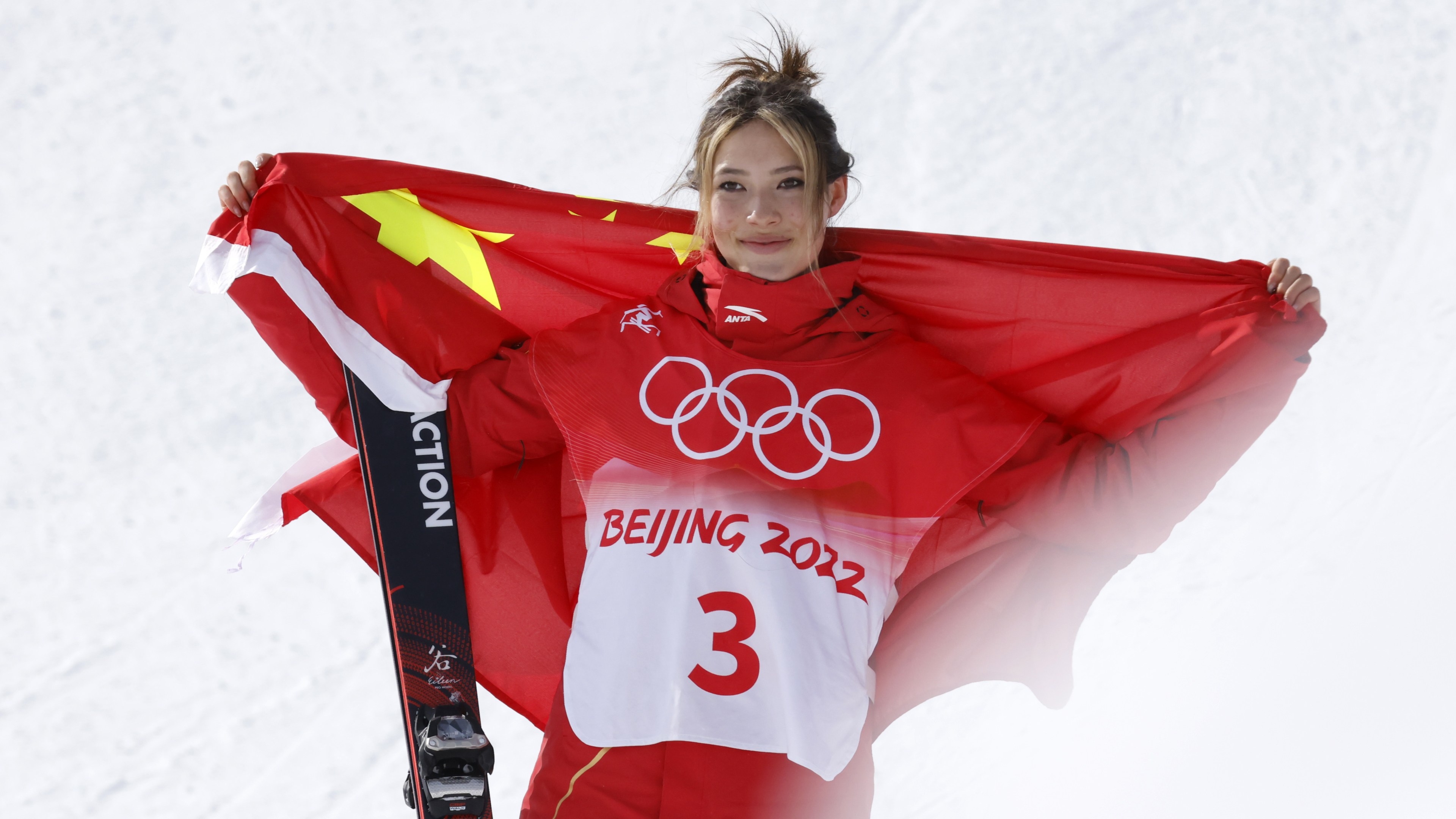
At 22, Eileen Gu has become the most polarizing athlete of her generation without ever failing a drug test or breaking a rule. The freestyle skier, who earned an estimated $23 million in 2025 alone, sparked a firestorm that reaches far beyond her silver medal performance at the 2026 Winter Olympics. Her crime? Choosing to represent China instead of the United States, the country where she was born and raised.
"Sometimes I feel like I'm carrying the weight of two countries on my shoulders," Gu said recently in Livigno, where she claimed her fifth career medal. The weight she describes isn't metaphorical. She's faced death threats, physical assault on the street, and relentless scrutiny that transforms every interview into a geopolitical interrogation.
What makes Gu's story so explosive isn't just her decision to compete for China. It's what that decision reveals about how we think about identity, loyalty, and belonging in an increasingly connected world.
The Business of National Identity
Follow the money, and Gu's choice becomes clearer. As the highest-paid Winter Olympic athlete globally, her partnerships with Chinese companies including the Bank of China dwarf what most American winter sports athletes earn. The Chinese market offers opportunities that simply don't exist in the US for freestyle skiing.
But reducing her decision to pure economics misses the deeper story. Gu represents China "for her mother, who was born there," she has stated repeatedly. This personal connection challenges the idea that national representation should be determined solely by birthplace.

Professor Gijsbert Oonk from Erasmus University Rotterdam, who studies athlete migration and national identity, notes that "athletes will increasingly move to whatever country provides them with the most resources." Yet Gu's situation transcends typical sports migration. She's not switching countries for better training facilities. She's choosing between two parts of her identity.
The complexity deepens when you consider China's citizenship laws. The country doesn't recognize dual citizenship, creating a legal gray area around Gu's status that she's consistently refused to clarify.
When Politics Collide with Podiums
The backlash reached new heights when Vice President JD Vance weighed in, suggesting Gu should have represented Team USA instead of China. Her response went viral: a simple "Thanks, JD!" that somehow managed to be both dismissive and diplomatic.
This exchange crystallized the impossible position Gu occupies. Every statement becomes political. Every medal becomes a referendum on American values versus Chinese influence. She's expected to answer for China's human rights record while simultaneously being criticized for not being patriotic enough to America.
"I've gone through some things as a 22-year-old that I really think no one should ever have to endure, ever," Gu revealed, describing physical assaults and death threats that followed her Olympic choice.
The intensity of the reaction reveals something uncomfortable about how we view athletic success. When Gu wins, some Americans feel robbed of "their" medal. When she loses, others take satisfaction in her failure. Both responses treat athletes as extensions of national policy rather than individuals pursuing excellence in their sport.
The irony is stark. Gu has repeatedly stated she feels like she represents both countries, yet neither fully claims her. Americans question her loyalty while some Chinese fans criticize her for not renouncing her US ties completely.
The New Generation of Global Athletes
Gu isn't alone in facing this scrutiny. Athletes with mixed heritage increasingly find themselves navigating complex identity politics. Lucas Pinheiro Braathen, who competed for Norway with a Brazilian mother and Norwegian father, represents a growing trend of Olympic athletes who embody multiple nationalities.
The difference is scale and stakes. Freestyle skiing doesn't carry the geopolitical weight of US-China relations. Gu's choice became a proxy battle in the broader competition between superpowers, turning her athletic career into diplomatic theater.
Her case also highlights the evolving nature of identity itself. For Gen Z athletes, national borders feel less definitive than they did for previous generations. They grow up with global social media, international training camps, and coaches from multiple countries. The idea that you must choose one flag and stick with it feels increasingly antiquated.
"Fame was never my goal," Gu insists, yet she's become more famous for her passport than her performances. Her "biggest goal has always been to bring the sport to more young people," but that mission gets lost in the noise of political debate.
Beyond the Medal Count
The reporter who asked whether Gu considered her Olympics medals "two silvers gained or two golds lost" captured something essential about how we frame athletic achievement. Gu's viral response rejected the premise entirely, but the question itself reveals our obsession with winners and losers rather than the complexity of competition.
This reductive thinking extends to national representation. We want clear heroes and villains, obvious loyalties and simple explanations. Gu offers none of these. She's simultaneously American and Chinese, grateful for opportunities from both countries, and unwilling to denounce either.

Her refusal to address China's treatment of Uyghurs, stating it's "not her business," frustrated critics who wanted her to take a stand. Yet athletes shouldn't be required to serve as diplomatic representatives or human rights advocates. They're competitors, not politicians.
The Olympics were designed as a celebration of athletic excellence, not a citizenship inquisition. But in practice, they've become exactly that for athletes like Gu who complicate our neat categories of national belonging.
The Price of Choosing
What's most striking about the Gu controversy is how it exposes our own insecurities about identity and loyalty. Her success for China feels like a loss for America, as if athletic achievement were a zero-sum game between nations rather than individual accomplishment.
The reality is messier and more interesting. Gu represents the future of elite athletics: globally trained, multiply affiliated, and comfortable with complexity. Her story challenges the fiction that Olympic competition reflects some pure expression of national character.
Instead, it reveals the administrative reality behind the flags and anthems. Athletes choose based on coaching, funding, opportunity, and personal connection. The poetry of nationalism gets complicated by the prose of modern sports business.
Gu's experience serves as a cautionary tale about the costs of politicizing individual athletic choices. When we demand that 22-year-olds serve as symbols of national virtue, we risk destroying the joy and excellence that make sports worth watching in the first place. Her silver medal isn't a statement about American decline or Chinese ascendance. It's simply the result of one athlete's pursuit of excellence in a sport she loves, representing a heritage she claims as fully her own.