The $20 Endless Shrimp That Broke Red Lobster
How America's seafood giant became a cautionary tale about the brutal economics killing casual dining.
Red Lobster's bankruptcy filing in May 2024 wasn't just another restaurant closure story. It was the spectacular implosion of a business model that had worked for decades, undone by a single promotional offer that lost the company $11 million in one quarter. The endless shrimp deal, priced at $20, attracted exactly the wrong customers: those who could eat $50 worth of shrimp while paying a third of that amount.
But the shrimp promotion was merely the final straw. Red Lobster's collapse reveals the brutal mathematics destroying America's casual dining sector, where restaurants operate on razor-thin margins while facing relentless cost pressures from every direction.
The Economics of Eating Everything You Can
All-you-can-eat promotions work on a simple premise: most customers will eat a reasonable amount, subsidizing the few who gorge themselves. Red Lobster's endless shrimp broke this fundamental assumption.
The chain discovered that unlimited offers don't attract average customers looking for value. They magnetize competitive eaters, families treating it as entertainment, and anyone determined to "get their money's worth" by consuming as much as physically possible.
Shrimp costs fluctuate wildly based on weather, disease, and global supply chains. When Red Lobster locked in that $20 price point, they essentially placed a massive bet that customers would show restraint. They lost spectacularly.
Labor costs compounded the problem. Each endless shrimp customer required multiple trips to the kitchen, extra plates, extended table time, and additional server attention. The promotion didn't just lose money on food costs, it destroyed operational efficiency across the board.
When Private Equity Meets Seafood
Red Lobster's troubles began long before the shrimp disaster. In 2014, Darden Restaurants sold the chain to Golden Gate Capital for $2.1 billion. The private equity playbook unfolded predictably: Golden Gate immediately sold Red Lobster's real estate to another company, then leased the buildings back at higher rates.
This financial engineering extracted cash for Golden Gate's investors while saddling Red Lobster with permanent rent increases. The chain went from owning its locations to becoming a tenant, fundamentally weakening its balance sheet.
Thai Union, a seafood conglomerate, bought into Red Lobster in 2016 for $575 million, eventually taking full control in 2020. By late 2023, Thai Union wrote down its entire Red Lobster investment to zero, absorbing a $527 million loss. The writing was on the wall months before bankruptcy.
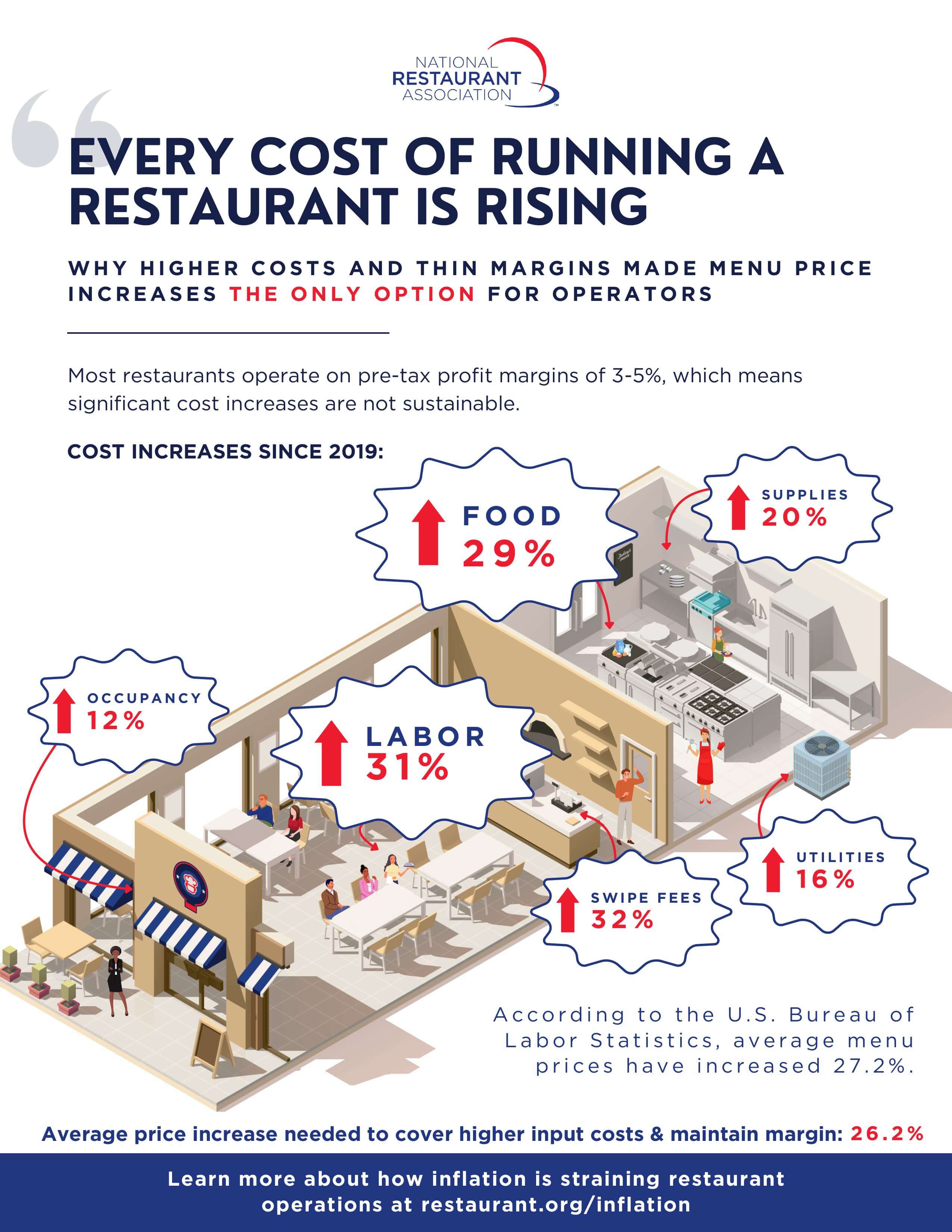
Red Lobster operated on average pre-tax margins of 3-5%, meaning any significant cost increase became unsustainable without immediate menu price adjustments.
The Inflation Squeeze That's Killing Casual Dining
Red Lobster's collapse reflects broader pressures crushing the entire casual dining sector. Restaurant operating expenses have surged 30% since 2019, while pre-tax profit margins remain stuck at 3-5% industry-wide.
Labor costs alone increased 1-5% for over 89% of restaurant operators in 2023, with projections showing another 5% jump in 2024. Unlike other industries, restaurants can't easily automate away these increases. Someone still needs to cook, serve, and clean.
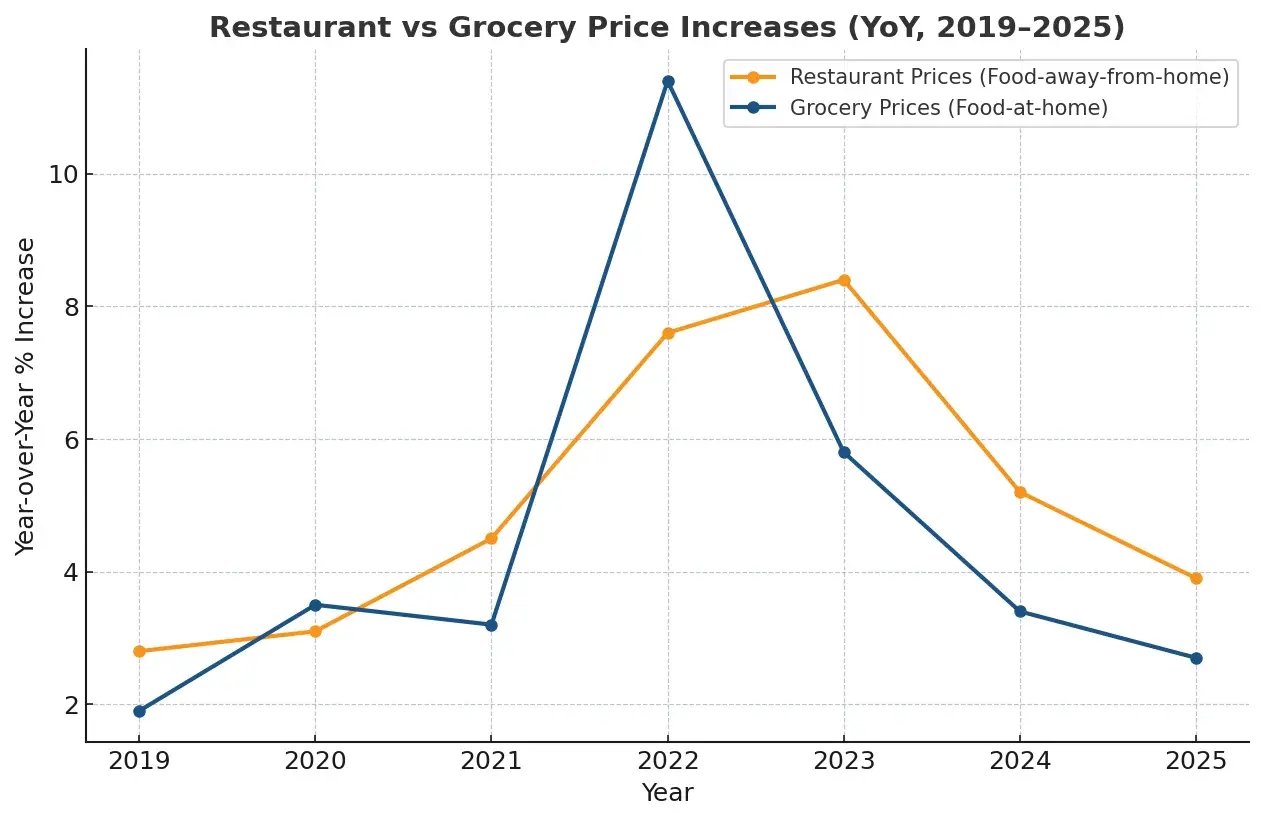
Food costs present an even more complex challenge. While grocery prices increased 2.7% year-over-year in recent data, restaurant ingredients face additional volatility. Seafood prices swing dramatically based on weather, fishing regulations, and global trade disruptions.
Rent, utilities, and transportation costs have all surged simultaneously, creating a perfect storm where every line item on a restaurant's P&L statement moves upward while customer traffic stagnates or declines.
The Death Spiral Mathematics
Casual dining chains face a brutal equation: raise prices and lose customers, or maintain prices and lose money. Red Lobster tried to thread this needle with promotional pricing, hoping volume would compensate for shrinking margins.
The strategy backfired catastrophically. Lower-income consumers, essential to casual dining success, have been hammered by years of inflation across housing, gas, and groceries. They're eating out less frequently, and when they do, they're choosing cheaper options or staying home entirely.
Meanwhile, higher-income diners have largely migrated upmarket to fast-casual chains offering fresher ingredients and faster service, or upscale restaurants providing genuine hospitality experiences. Casual dining occupies an increasingly uncomfortable middle ground.
The result is a death spiral: declining traffic forces restaurants to cut labor and quality, making the dining experience worse, driving away more customers, and accelerating the decline.
The Broader Carnage Across Casual Dining
Red Lobster's bankruptcy signals a broader reckoning across casual dining. Wendy's plans to close 300 locations in 2026. Jack in the Box announced 200 closures in August 2024. Long John Silver's has shuttered over 150 restaurants in three years.
Even survivors are retreating. Applebee's continues closing underperforming locations while completely reimagining its concept. The casual dining landscape that defined American suburbia for decades is contracting rapidly.
Restaurant executives expect continued turbulence through 2026, with many expressing caution about consumer spending power and macroeconomic conditions. The era of abundant, affordable casual dining appears to be ending.
The chains closing fastest are those stuck in the middle: too expensive for price-conscious consumers, not special enough for experience-seeking diners.
What Comes Next
Red Lobster emerged from bankruptcy in late 2024 with 580 locations still operating, but its future remains uncertain. The fundamental problems that drove the chain into bankruptcy haven't disappeared: razor-thin margins, inflation pressure, and changing consumer preferences.
The survivors in casual dining will likely be those that either move upmarket with premium ingredients and experiences, or strip costs to compete directly with fast food on price and convenience. The broad middle ground that Red Lobster occupied for decades is becoming uninhabitable.
For consumers, this means fewer options for family dining occasions and special celebrations. The Red Lobster of the 1990s and 2000s, with its sense of affordable abundance, may be gone forever.

Red Lobster's story isn't just about endless shrimp or private equity extraction. It's about the end of an era when casual dining could offer both abundance and affordability. In today's economy, restaurants are learning they can only choose one.