100 Men vs One Gorilla: How the Internet's Most Absurd Debate Reveals Our Collective Mental State
The viral meme that consumed 2025 isn't really about gorillas at all—it's a window into how we process stress in an election year.
While Americans debated voting machines and campaign promises in early 2025, the internet fixated on a more pressing question: Could 100 ordinary men defeat a single silverback gorilla in combat? The hypothetical battle consumed social media feeds, spawned thousands of TikTok videos, and even prompted MrBeast to tease a potential real-world experiment. What seemed like mindless entertainment was actually something far more revealing.
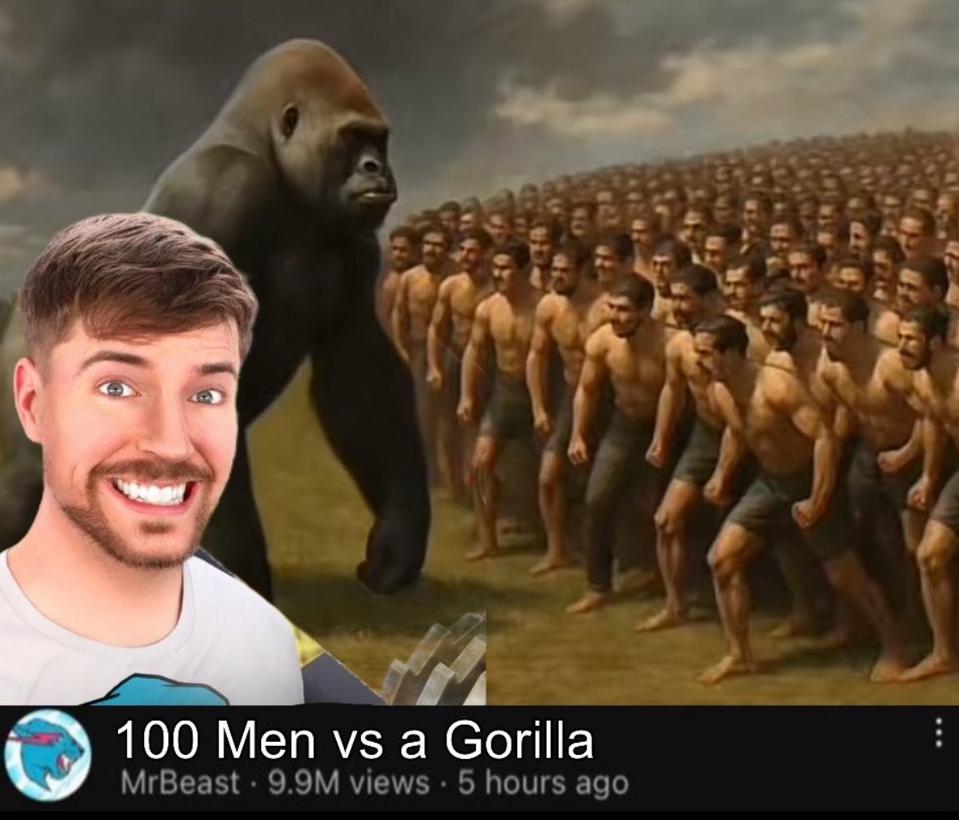
The meme originated as a simple thought experiment but exploded into cultural phenomenon because it offered something our overstimulated brains desperately needed: a completely ridiculous problem to solve instead of the genuinely terrifying ones we face daily. In a year when political anxiety reached fever pitch and social media algorithms served up an endless stream of crisis content, debating primate combat felt like blessed relief.
This isn't just internet trivia. The gorilla meme represents a new kind of collective coping mechanism—one that reveals how online communities have evolved to process stress through increasingly absurd shared experiences.
The Anatomy of Algorithmic Absurdity
The 100 men versus gorilla debate didn't emerge in a vacuum. It appeared precisely when Americans needed it most: during the intense buildup to the 2024 election aftermath and the continued political polarization of early 2025. Research published in Frontiers in Psychology shows that exposure to humorous content during stressful situations reduces cortisol levels and improves emotional regulation.
But this wasn't just any humor—it was specifically absurd humor. Unlike political satire, which reinforces existing divisions, or relatable memes about daily struggles, the gorilla debate was beautifully pointless. No political affiliation determined whether you thought the men or gorilla would win. No demographic markers mattered.

NPR's coverage revealed the scientific consensus: primatologist Tara Stoinski noted that "the sheer numbers that the humans have would mean that the gorilla would probably eventually be overpowered." But the actual answer mattered less than the act of debating it. The meme provided what psychologists call "cognitive offloading"—a mental break from processing genuinely consequential information.
What made it spread wasn't the gorilla's strength but our collective weakness. As one cultural critic observed, the meme endures "not because of the gorilla's strength, but because of our subconscious need to externalize and dramatize our collective impotence."
Stress Relief Through Artificial Stakes
The gorilla meme succeeded where other viral content failed because it created artificial stakes that felt manageable. In 2025, Americans faced an overwhelming array of real problems: inflation concerns, political instability, climate anxiety, and social division. These issues felt too large, too complex, and too personally threatening to process comfortably.
The hypothetical gorilla fight offered something different: a problem with clear parameters, definitive sides, and zero real-world consequences. You could argue passionately about tactical advantages, weight distribution, and coordination strategies without risking relationships or revealing political leanings.
Absurdist memes are a movement to question the significance of mainstream humor, utilizing simple, highly efficient frameworks to process complex emotions we can't otherwise articulate.
This pattern reflects what researchers call "displacement behavior"—when stressed organisms redirect their energy toward less threatening activities. Birds preen when confronted with predators. Humans apparently debate gorilla combat scenarios when confronted with existential political anxiety.
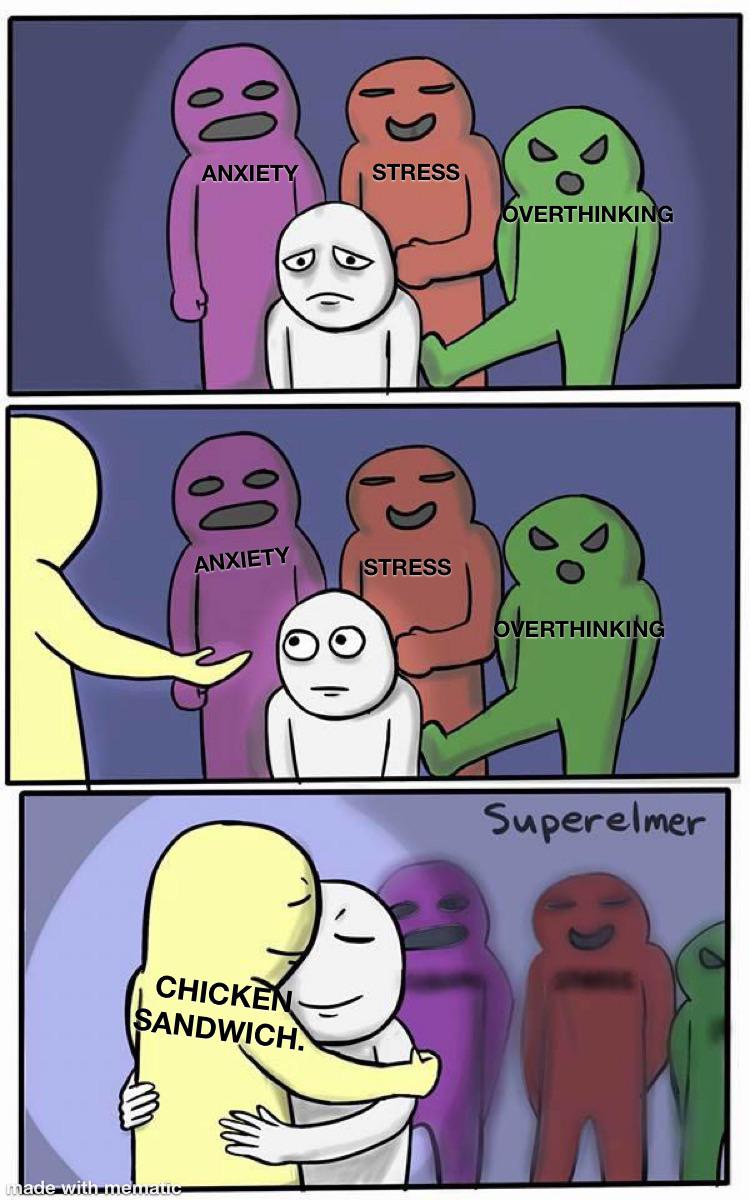
The timing wasn't coincidental. The meme peaked during March and April 2025, precisely when political tensions from the previous election cycle were crystallizing into policy debates. Election-related memes from 2024 had shown how humor became a coping mechanism for collective anxiety, but those still carried political weight. The gorilla debate was pure escapism.
The Psychology of Impossible Questions
What made the gorilla meme particularly effective was its perfect impossibility. Unlike debates about real policies or social issues, this hypothetical could never be definitively resolved through experience. This created a safe space for argument—intense enough to provide emotional release, hypothetical enough to avoid real consequences.
The meme also tapped into deeper psychological currents about masculinity and power. The scenario specifically featured men fighting a gorilla, invoking primal anxieties about strength, coordination, and survival. In a political climate where many felt powerless against larger forces, the fantasy of collective human effort overcoming natural strength provided psychological satisfaction.
Research on internet memes as stress relief shows that shared absurdist content creates "emotional communion"—a sense of collective experience that reduces isolation. The gorilla debate functioned like a massive, distributed support group disguised as entertainment.
The meme's structure also mattered. Unlike complex political issues with multiple variables, the gorilla scenario had binary clarity: either the men win or the gorilla wins. This simplicity provided cognitive relief in an era of endless complexity and ambiguity.
Election Year Escapism Patterns
The gorilla meme's viral success reveals something important about how internet culture processes political stress. During election cycles, absurdist content typically spikes as users seek relief from constant political messaging. But 2025 showed an evolution in this pattern.
Previous election years saw political memes dominate—content that processed anxiety by directly engaging with political figures and issues. The 2024 election cycle was particularly meme-heavy, with Gen Z's "memification" of political candidates reaching unprecedented levels. Young voters used TikTok sounds and Instagram formats to make serious political content digestible.
-min%20(1)_1728632921.jpg)
But by 2025, the appetite for political memes had reached saturation. Users didn't want more ways to think about politics—they wanted not to think about politics at all. The gorilla meme provided that escape while still offering the social bonding and shared experience that make viral content addictive.
This shift suggests that internet communities are developing more sophisticated stress management strategies. Instead of processing anxiety through political humor, users are creating completely separate spaces for collective emotional release.
The Future of Absurdist Coping
The gorilla meme's success points toward a larger trend in how online communities will handle stress in the coming years. As political polarization intensifies and global challenges multiply, the internet's appetite for meaningful engagement may paradoxically decrease.
We're likely to see more content that offers the social benefits of viral participation without the emotional costs of genuine engagement. These "safe absurdities" provide community bonding, creative expression, and stress relief without risking the psychological toll of processing real-world problems.
The pattern has precedent. During the COVID-19 pandemic, absurdist memes surged as people sought humor that didn't reference their immediate trauma. The gorilla debate represents an evolution of this coping mechanism—proactive absurdity that prevents stress rather than merely responding to it.
The meme endures not because of the gorilla's strength, but because of our subconscious need to externalize and dramatize our collective impotence.
This trend has implications beyond entertainment. If internet communities increasingly turn toward absurdist escapism, it could affect political engagement, news consumption, and social discourse. The gorilla meme might represent the early stages of a broader cultural retreat from serious online engagement.
But it's not necessarily negative. Research shows that humor-based stress relief can improve mental health and social cohesion. If absurdist memes help people maintain psychological stability in an increasingly overwhelming information environment, they serve a genuine social function.
The 100 men versus one gorilla debate revealed something profound about our collective mental state in 2025: we're so overwhelmed by real problems that we've turned fictional fights into mass entertainment. It's not the most sophisticated coping mechanism, but it might be exactly what we need. Sometimes the best response to an impossible world is an impossible question.